
How Hotel Photography Directly Impacts Booking Rates and Revenue
When a potential guest compares two London hotels at similar price points, the decision rarely comes down to the amenities listed — it comes down to how each property makes them feel in the few seconds they spend looking at the images. A hotel photographer is not a cosmetic investment. The visual quality of your property’s imagery is one of the most measurable drivers of direct booking rate, average daily rate, and guest confidence — and the data from the hospitality industry supports this clearly.
This post explains precisely how hotel photography services affect your commercial performance, what separates average hospitality imagery from the kind that converts browsers into bookers, and what London hotel brands need to consider when planning their next photography project.
The Commercial Case for a Professional Hotel Photographer
The link between image quality and booking behavior is well-documented. Research published by Expedia Group found that hotels with higher-quality photography receive significantly more bookings than comparable properties with lower-quality images, with some properties seeing uplift of over 225% in booking likelihood when imagery was professionally produced. 1
This effect is amplified across OTAs (online travel agents), direct booking websites, and social media. Every platform where your property appears is a visual touchpoint — and each one either builds or erodes the guest’s confidence in booking. A professional hotel photographer produces images that work consistently and persuasively across all of them.
The commercial impact falls into four specific areas:
- Booking conversion rate. Higher-quality images increase the percentage of visitors who move from browsing to booking — the most direct revenue impact.
- Average daily rate. Premium imagery supports premium pricing. When a property looks exceptional, guests accept and expect a higher nightly rate.
- Direct booking share. Strong photography on your own website encourages guests to book directly rather than through OTAs, reducing commission costs.
- Repeat guest confidence. Guests whose experience matches the photography trust the brand more and are more likely to rebook and recommend.
What Hotel Photography Services Actually Cover
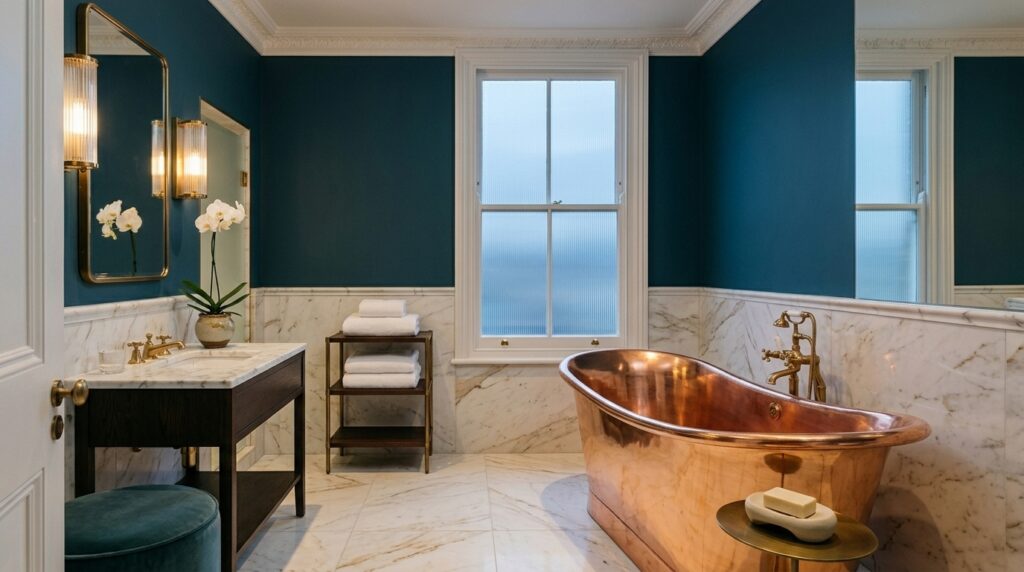
When a hospitality photographer works with a hotel, the brief goes well beyond photographing bedrooms. A complete set of hotel photography services covers every space a potential guest will want to visualise before booking — and every image a marketing team needs to run campaigns across the full year.
Bedrooms and suites
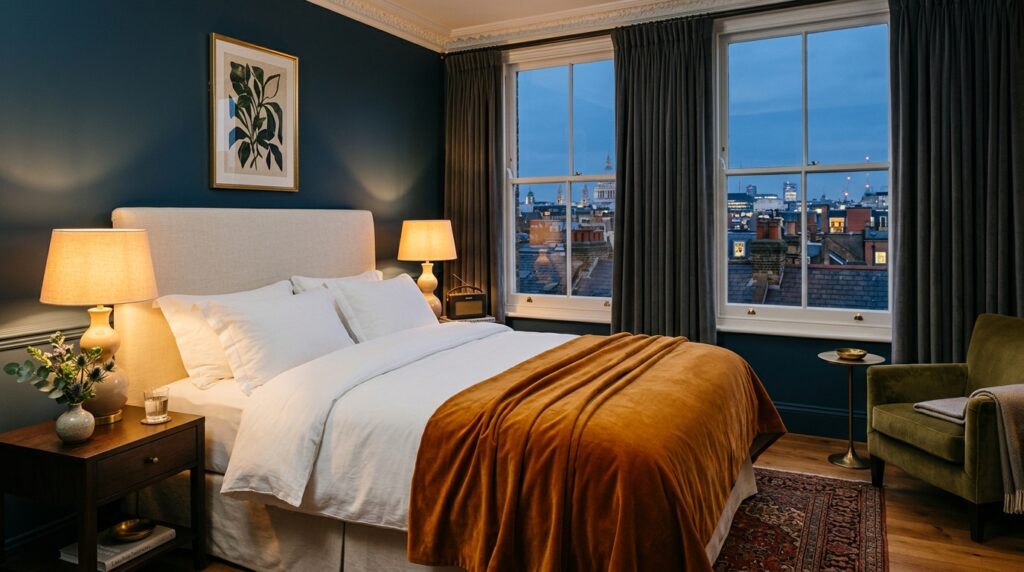
The most searched and most scrutinised images in any hotel gallery. These must balance aspiration with accuracy — a room that photographs beautifully but disappoints on arrival creates negative reviews. Expert lighting from a hospitality photographer ensures bedrooms are warm, well-proportioned, and honest to the experience.
Lobby, communal areas, and corridors
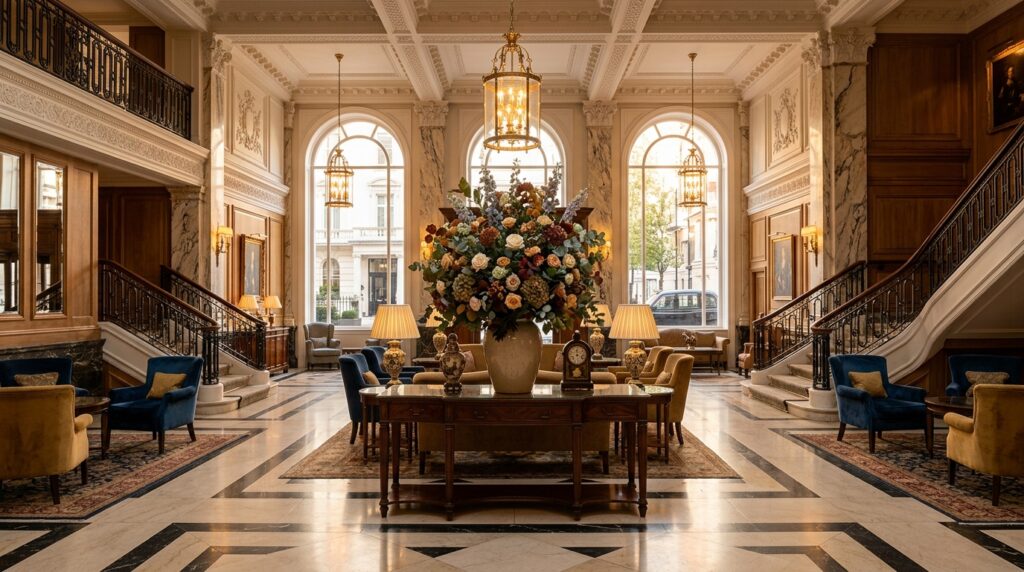
First impressions start before the bedroom. A London hotel’s lobby communicates brand, scale, and tone within a single frame. These spaces require wide but undistorted compositions, and the lighting balance between interior ambiance and natural light from windows demands technical precision.
Dining, bar, and F&B spaces
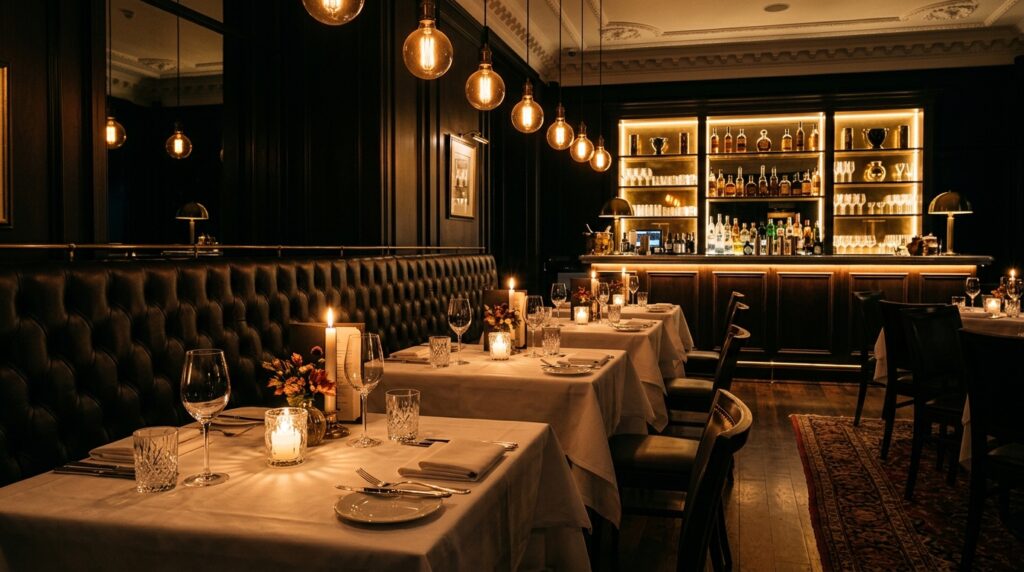
Research from TripAdvisor found that hotels with strong food and beverage visuals generate meaningfully higher ancillary revenue from on-property dining — guests pre-decide to eat at the hotel restaurant based on what they see during the booking process.2 A hotel photographer who understands F&B composition ensures these images do the same commercial work as dedicated restaurant photography.
Exterior and location context
For London hotels particularly, the relationship between the property and its surroundings is part of the brand story. Whether a Mayfair townhouse hotel, a contemporary riverside property, or a design-led boutique in Shoreditch, exterior imagery contextualises the stay and amplifies the sense of place.
Lifestyle and in-stay experience
Lifestyle imagery — guests using the spa, dining in the restaurant, relaxing in rooms — adds an emotional layer that straight interior photography cannot achieve alone. Cornell Hospitality Quarterly research identifies emotional engagement with pre-stay imagery as a significant predictor of booking intent.3 A complete set of hotel marketing photography blends interior, architectural, and lifestyle content to cover all of these touchpoints.
What Makes Luxury Hotel Photography Different
Not all hotel photography is equal. A luxury hotel photography brief requires a different standard of technical execution and creative approach from a budget hotel shoot. The difference is visible immediately — and guests at the luxury end of the market are acutely sensitive to it.
Several factors separate luxury hotel photography from standard hospitality imagery:
- Medium format cameras. The tonal range, detail, and depth achievable with medium format equipment is meaningfully different from a standard DSLR. Fabric textures, marble surfaces, and architectural details render with a quality that communicates premium without stating it.
- Multi-source lighting. Luxury spaces have complex lighting—candles, pendants, floor lamps, natural light, and architectural lighting all operating simultaneously. A skilled hospitality photographer balances all of them in a single frame rather than flattening everything with a single flash source.
- Frame-by-frame post-production. Batch processing is a volume approach. Luxury hotel photography requires individual retouching of every frame: color grading, window pulls, sky management, and detail work.
- Considered composition. In a luxury property, every element in the frame is a design decision. A specialist hotel photographer understands how to compose images that honor the designer’s intent rather than simply documenting the space.
For London’s five-star and boutique hotel sector, this level of craft is not optional — it is what separates the imagery of top-performing properties from those that underperform on OTAs despite comparable room quality.
Planning a Hotel Photography Project in London
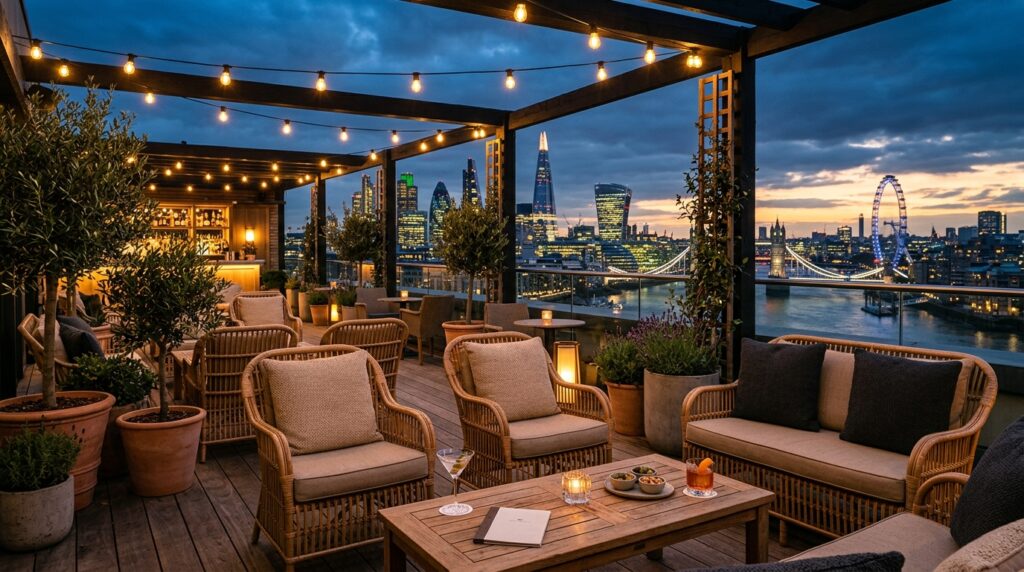
A hotel photography project is a production, not a visit. Getting the most out of a shoot requires planning across several dimensions:
Timing
Natural light varies significantly by season in London. Summer shoots capture long golden hours and bright daylight; autumn and winter shoots require more artificial lighting setup to achieve the same results. For rooftop bars, terraces, and properties with significant glazing, understanding the light direction at your specific postcode is part of the brief.
Operational planning
Shooting in an operational hotel requires coordination with housekeeping, F&B, reception, and management. Rooms need to be out of service during shooting, public areas need to be cleared for specific windows, and lifestyle shoots require models or cooperative staff. A professional hotel photographer plans all of this in pre-production to minimise disruption and maximise shooting time.
Licensing and usage
Hotel imagery has a long shelf life and is used across many channels — OTAs, the hotel website, social media, PR, print collateral, and trade press. Usage rights should be agreed at briefing stage, not after delivery. Phocuswire’s analysis of hotel digital marketing identifies consistent visual branding across owned and third-party platforms as a key driver of direct booking growth.4 Ensure your hotel photography services brief covers the full range of usage from the outset.
Seasonal refreshes
The most commercially effective hotel brands in London treat photography as an ongoing asset programme — not a one-time production. Seasonal imagery, new room openings, F&B menu changes, and event space reconfiguration all require updated visuals. A relationship with a specialist hotel photographer makes this practical and consistent.
Frequently Asked Questions
How many images should a hotel photography shoot deliver?
This depends on the size of the property and the intended use of the imagery. A boutique London hotel with 20 to 30 rooms typically needs 60 to 120 finished images to cover all spaces adequately across OTA listings, the hotel website, and social channels. Larger properties or those with significant F&B and event space require proportionally more. Your hotel photographer should discuss the deliverable scope during the briefing—not after the shoot.
How long does a professional hotel photography shoot take?
A thorough hotel shoot takes one to three days depending on property size, the number of room categories, and whether lifestyle photography is included. Rushed single-day shoots for larger properties inevitably compromise on lighting setup time and result in images that fall short. Budget the time properly — the cost of a second shoot day is trivial compared to the revenue impact of poor imagery.
Should we use models in our hotel photography?
For luxury hotel photography, lifestyle imagery with models adds a layer of emotional engagement that pure interior photography cannot achieve. Guests imagine themselves in the space. Models used should reflect your actual guest profile — aspirational but realistic. For boutique and independent London hotels, real staff members and carefully selected guests can work equally well, provided the photography and direction are professional.
How often should hotel photography be updated?
As a minimum, hotel photography should be fully refreshed every three to four years — or sooner following a refurbishment, rebrand, or significant room redesign. OTA algorithms also factor in image recency as a ranking signal in some markets. Seasonal content updates — primarily for F&B, events, and outdoor spaces — should happen annually at minimum.
What is the difference between a hospitality photographer and a general commercial photographer?
A hospitality photographer specializes in the specific technical and creative challenges of hotel environments: managing mixed lighting sources, composing rooms that read both accurately and aspirationally, coordinating around live operations, and producing imagery that performs commercially across every platform a hotel uses. A general commercial photographer may produce competent images—but the specialist knowledge of how hotel imagery drives booking behavior makes a measurable commercial difference. View examples of hotel photography services at interiorphotographer.photos.
Commission Your Hotel Photography Project
The visual quality of your hotel’s imagery is one of the few marketing assets entirely within your control — and one of the most directly connected to bookable revenue. Whether you are planning a full property shoot, a seasonal refresh, or a new F&B campaign, a specialist hotel photographer with a proven approach to luxury hotel photography delivers imagery that earns its investment back in direct bookings.
Browse the full hotel photography portfolio and lifestyle photography portfolio at interiorphotographer.photos, or get in touch via the contact page to discuss your project. Joel Knight is a London-based hospitality photographer working with hotel brands, boutique properties, and luxury operators across London and internationally.
REFERENCES & CITATIONS
- Expedia Group (2023). Lodging Partner Research: The Value of Hotel Photography. expediagroup.com/partners. [Hospitality industry research — direct booking uplift from professional hotel photography.]
- TripAdvisor Insights (2022). How Food & Beverage Photography Drives On-Property Dining Revenue. tripadvisor.com/TripAdvisorInsights. [Industry data on visual content and ancillary F&B revenue at hotels.]
- Kim, M. & So, K.K.F. (2021). The role of visual imagery in hospitality booking intent. Cornell Hospitality Quarterly, 62(3), 278–293. journals.sagepub.com/home/cqx. [Peer-reviewed: emotional engagement with pre-stay imagery as predictor of booking intent.]
- Phocuswire (2023). Visual Branding Consistency and Direct Booking Growth in Independent Hotels. phocuswire.com. [Hospitality technology and marketing analysis — OTA visual consistency and direct booking behaviour.]