
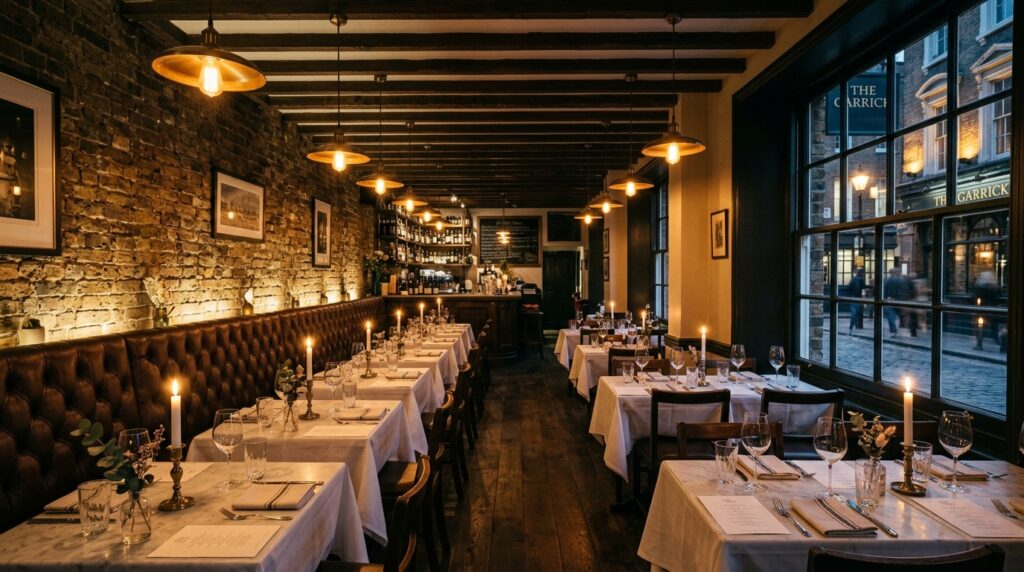
Why F&B Brands Need a Restaurant Interior Photographer for Social Media
Posting on Instagram from your phone is not a social media strategy. For London restaurants and bars competing in one of the most visually saturated hospitality markets in the world, the quality of your content on social media is directly connected to how many people walk through your door. A professional restaurant interior photographer produces the imagery that actually moves the needle: images strong enough to stop a scroll, build a following, and convert a viewer into a booking. The gap between a restaurant that photographs its own food in the dining room and one that commissions specialist restaurant interior photography is visible in every metric that matters — reach, engagement, saves, and ultimately, covers.
This post explains exactly why professional restaurant photographer London work drives social media performance, and what F&B brands need from their visual content to grow in 2024 and beyond.
Social Media Has Become the Primary Discovery Channel for London Restaurants
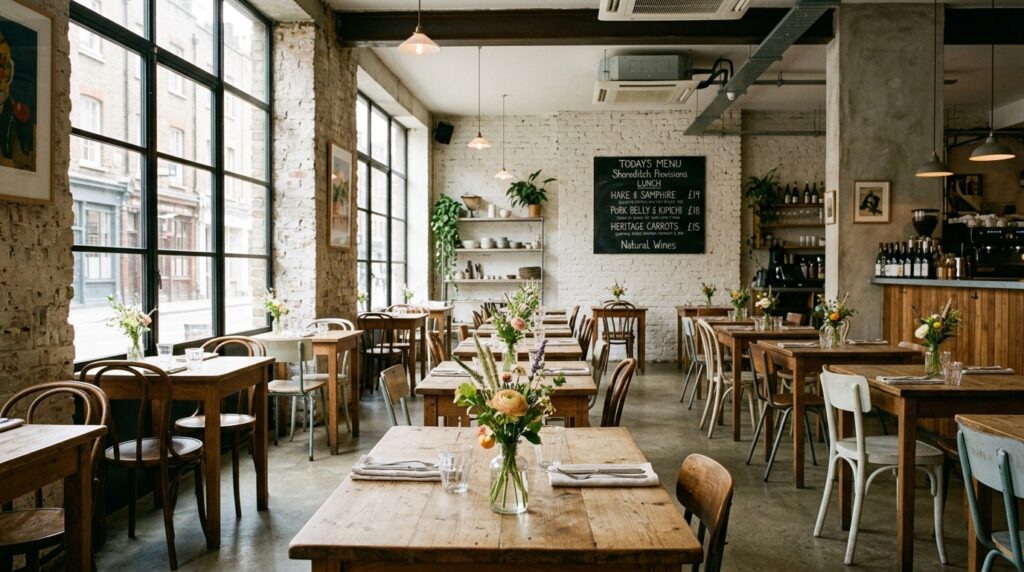
London diners in the 25 to 44 demographic now discover restaurants primarily through social media — ahead of recommendations, review platforms, and press features. Yelp’s consumer behaviour research found that over 60% of diners under 40 visited a restaurant’s social media profile before making a booking decision, and that the quality of the imagery they found was the deciding factor in whether they proceeded.1 For independent London restaurants without the marketing budgets of large hospitality groups, this creates both a challenge and a significant opportunity.
The challenge is that social media algorithms reward visual quality. An image that stops a user scrolling — that earns a save, a share, or a comment — is distributed to a wider audience. An image that does not is buried. The opportunity is that a single set of professional restaurant interior photography produces content that works across Instagram, Google, booking platforms, and press simultaneously — multiplying the commercial return on a single shoot day.
For London restaurants specifically, social media discovery has a geographic dimension that amplifies this effect. A strong Instagram presence with professionally produced imagery generates searches that include the area name — Shoreditch restaurant, Borough Market lunch, Notting Hill dinner — feeding directly into local discovery on Google and on booking platforms like OpenTable and Resy.
What Professional Restaurant Interior Photography Produces That Phone Content Cannot
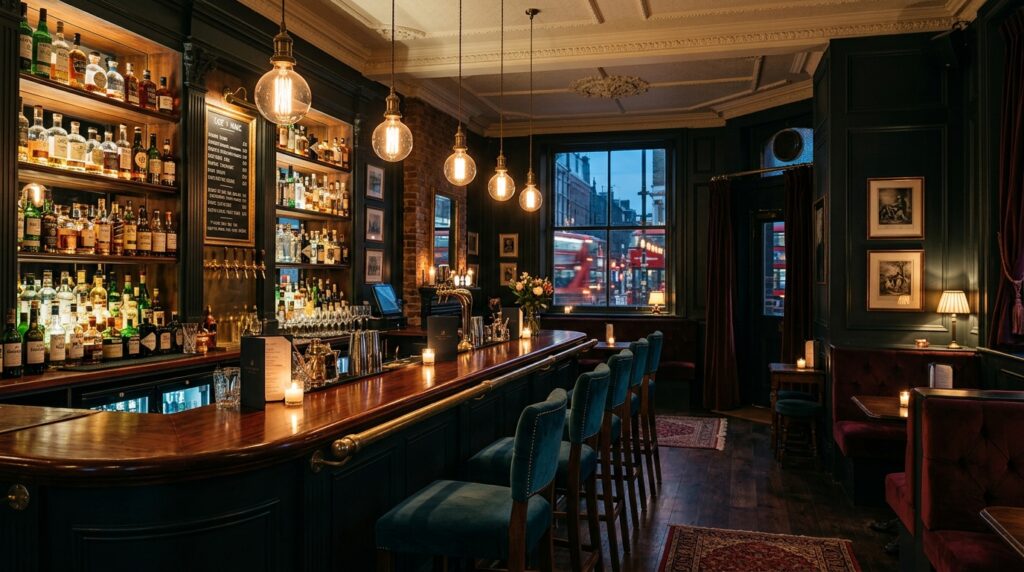
Instagram’s own business research found that professional photography generates between two and three times the engagement of user-generated content on business profiles, and that the save rate — the metric most strongly correlated with algorithm distribution — is disproportionately higher for professionally produced images.2 This is not a marginal difference. For a London restaurant posting three to five times per week, replacing phone content with professional imagery can fundamentally shift a profile’s reach.
The specific visual qualities that drive this difference are worth understanding in detail:
Controlled and considered lighting
Restaurant lighting is designed for atmosphere, not photography. Pendant lights create pools of warmth that look beautiful in person but photograph as blown-out highlights surrounded by deep shadow. A professional restaurant interior photographer uses supplementary lighting and technical knowledge of exposure to capture that atmosphere accurately — so the image feels like the room rather than a corrected version of it.
Depth of field and lens choice
The shallow depth of field and precise focus that distinguishes professional food and interior photography from phone images communicates quality before a viewer consciously registers what they are looking at. It is a visual signal of craft — and craft signals premium. For London bars and restaurants operating at the mid to high end of the market, this distinction is commercially significant.
Composition that tells a story
A restaurant interior photographer does not simply point a camera at a table. They choose a height, an angle, a background, a foreground element, and a framing that communicates the specific story of that space — intimate, energetic, refined, neighbourhood, celebratory. That storytelling is what makes an image save-worthy rather than scroll-past-worthy.
Consistency across a content set
A single great image is useful. A consistent library of professionally produced restaurant interior photography transforms a social media profile. Visual consistency — in colour temperature, composition style, and overall aesthetic — is what makes a profile feel like a brand rather than a collection of unrelated posts. This is what large London restaurant groups understand and independent venues often do not invest in until they see the difference.
How a Restaurant Interior Photographer Structures a Social Media Content Shoot
A professionally planned restaurant photographer London social media shoot is structured differently from a standard property shoot. The goal is not simply beautiful images — it is a library of content that covers every format, every platform requirement, and every narrative thread a restaurant needs to communicate across several months of posting. Toast’s restaurant industry data shows that restaurants with a planned content library post more consistently and achieve significantly higher average engagement rates than those shooting ad hoc.3
Format planning before the shoot
Social media content needs to exist in multiple formats simultaneously: square posts for the main feed, vertical crops for Stories and Reels, wide horizontal images for website banners and Google profiles. A professional shoot plans for all of these in advance, so every image captured has a planned output format and no shoot time is wasted on images that only work in one context.
Narrative variety within a single shoot day
A complete restaurant interior photography social media shoot produces content across several distinct visual narratives: the atmosphere of the space (wide interior shots), the care in the details (table styling, glassware, seasonal flowers), the food and drink offer (dishes and cocktails in context), and the character of the venue (bar, entrance, exterior at dusk). Each narrative feeds a different reason to post — and a different reason for a follower to save or share.
Food and interior integration
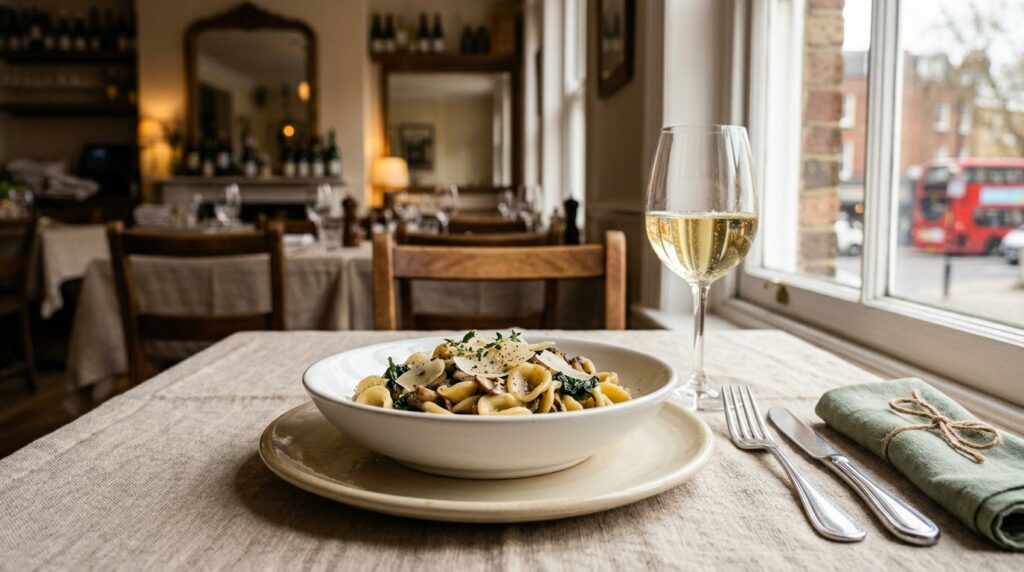
The most commercially effective social media content for London restaurants combines food photographer London work with the interior context — dishes photographed on dressed tables in the actual dining room, cocktails at the bar with the shelving and atmosphere behind them, a dessert on a table with a candle and the room in soft focus. This integrated approach produces images that communicate both the food quality and the dining experience in a single frame, which is what drives saves and booking intent.
Seasonal and campaign content
A well-planned shoot produces core evergreen content and a set of seasonal or campaign images — Christmas menus, Valentine’s dining, summer terrace service, new cocktail launches. Planning these within a single shoot day, rather than as separate productions, significantly reduces the cost per image and ensures visual consistency across the full year’s content calendar.
The Commercial Return on Professional Restaurant Interior Photography
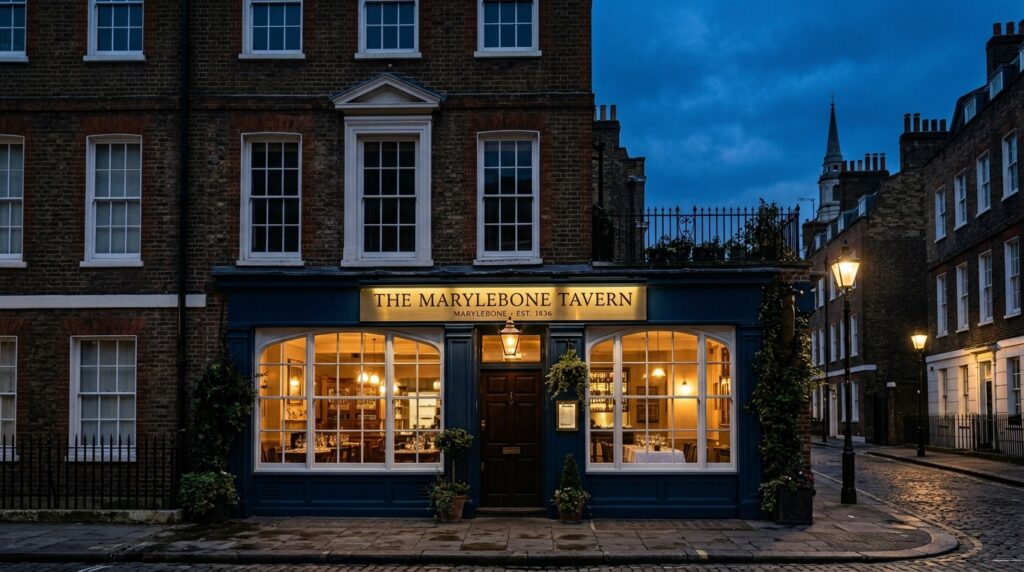
The commercial case for investing in a professional restaurant interior photographer for social media content is straightforward when measured against the cost of the alternative. Nielsen Norman Group’s research on content quality and user trust found that users assess the credibility of a hospitality brand based on the visual quality of its digital content within the first two seconds of engagement — and that lower-quality visuals reduce perceived price justification regardless of the actual product quality.4 For London restaurants operating at the £50 to £100 per head price point, the perception gap created by poor imagery directly affects the type of guest the restaurant attracts and the frequency with which they book.
The return on professional restaurant photography compounds across three revenue dimensions:
Organic reach and follower growth
Professionally produced bar interior photography London and restaurant imagery consistently outperforms phone content in the metrics that drive organic growth: saves, shares, and profile visits following a post. Over a 12-month period, a restaurant feeding its social channels with professional content builds an audience quality — engaged, location-aware, booking-intent — that phone content does not produce.
Press and influencer coverage
Food writers, lifestyle bloggers, and hospitality press commissioning features on London venues routinely use a restaurant’s own social media and website imagery to assess whether the venue is worth covering. A restaurant interior photographer who produces press-quality images as part of the social media content shoot removes the barrier between your venue and unpaid coverage in Time Out, The Evening Standard, and the weekend broadsheets.
Direct booking conversion
A social media profile that looks like a brand — consistent, beautifully produced, and visually specific — converts profile visitors to website visitors, and website visitors to bookings, at a meaningfully higher rate than a profile of inconsistent phone photography. This is the closing link in the chain from discovery to cover: great hospitality interior photography on social media earns the click through, and great imagery on the website converts it.
Frequently Asked Questions
How many images does a social media content shoot produce?
A dedicated social media content shoot for a London restaurant or bar typically produces between 50 and 100 finished images across all formats. This covers approximately three to four months of consistent daily posting at three to five times per week. OpenTable’s platform research confirms that restaurants posting consistently with high-quality imagery see measurably higher profile engagement and reservation conversion than those posting irregularly.5 Planning a shoot to produce a quarterly content bank, rather than a one-off set of images, is the most cost-efficient approach.
Can the same shoot cover both interior photography and food photography?
Yes — and the most commercially effective restaurant content combines both within the same shoot. A restaurant interior photographer who also shoots food and beverage in context produces a library where the food imagery and the interior imagery feel like they belong together. This visual consistency is what makes a restaurant’s social profile feel considered and branded rather than assembled from different sources. Joel Knight covers both disciplines as part of a single integrated production.
How often should a London restaurant commission professional photography?
As a baseline, a full restaurant interior photography shoot should be commissioned annually or at any point of significant change — a menu rebrand, an interior refresh, a new seasonal offer, or the opening of a private dining room. For high-volume social media programmes, a supplementary content shoot every quarter keeps the library fresh and ensures seasonal campaigns have original imagery rather than recycled content.
What formats should restaurant photography be delivered in?
A professional delivery for social media use includes high-resolution originals for print and press, web-optimised versions for website and Google Business Profile, and pre-cropped formats for Instagram square posts, Instagram Stories, and Reels cover frames. Receiving all formats at delivery means your team can post immediately without additional editing work. This should be agreed at briefing stage, not requested after delivery.
Is professional photography worth it for a small independent restaurant?
Particularly for small independents, yes. Large restaurant groups have marketing teams and ongoing budgets. An independent London restaurant’s single greatest competitive advantage on social media is visual quality — because it is achievable in a single shoot day and produces content that competes directly with group-level marketing. A professional restaurant interior photographer levels the playing field between a 30-cover neighbourhood restaurant and a large group venue on the same street.
Commission Your Restaurant Interior Photography Shoot
London’s restaurant market is won and lost on first impressions — and for most potential guests, that first impression happens on a screen, not in a dining room. A professional restaurant interior photographer produces the visual case for your venue that turns a social media follower into a booker, a press enquiry into a feature, and a first-time visitor into a regular.
Browse the full restaurant and bar photography portfolio, the lifestyle photography portfolio, and the advertising photography portfolio at interiorphotographer.photos, then get in touch via the contact page to discuss your brief. Joel Knight is a London-based restaurant interior photographer working with independent venues, bar groups, and F&B brands across London.
REFERENCES & CITATIONS
- Yelp Inc. (2022). Consumer Behaviour and Visual Content in Restaurant Discovery. yelp-press.com. Cited in H2 Section 1. [Consumer research: social media photography as primary booking decision factor for under-40 London diners.]
- Instagram for Business (2023). Visual Content Performance: Professional vs User-Generated Photography on Business Profiles. business.instagram.com. Cited in H2 Section 2. [Platform research: professional photography engagement and save rate advantage on Instagram business profiles.]
- Toast Inc. (2023). Restaurant Success Report: Content Planning and Social Media Engagement. pos.toasttab.com/resources. Cited in H2 Section 3. [Industry data: planned content libraries and engagement rate performance for independent restaurants.]
- Nielsen Norman Group (2022). Visual Quality and Perceived Brand Credibility in Hospitality. nngroup.com. Cited in H2 Section 4. [UX research: two-second visual credibility assessment and price justification perception in hospitality brands.]
- OpenTable (2023). Platform Engagement and Reservation Conversion: The Role of Visual Content Consistency. restaurant.opentable.com/resources. Cited in H2 Section 5 FAQs. [Platform research: consistent high-quality imagery and measurably higher reservation conversion on OpenTable listings.]