
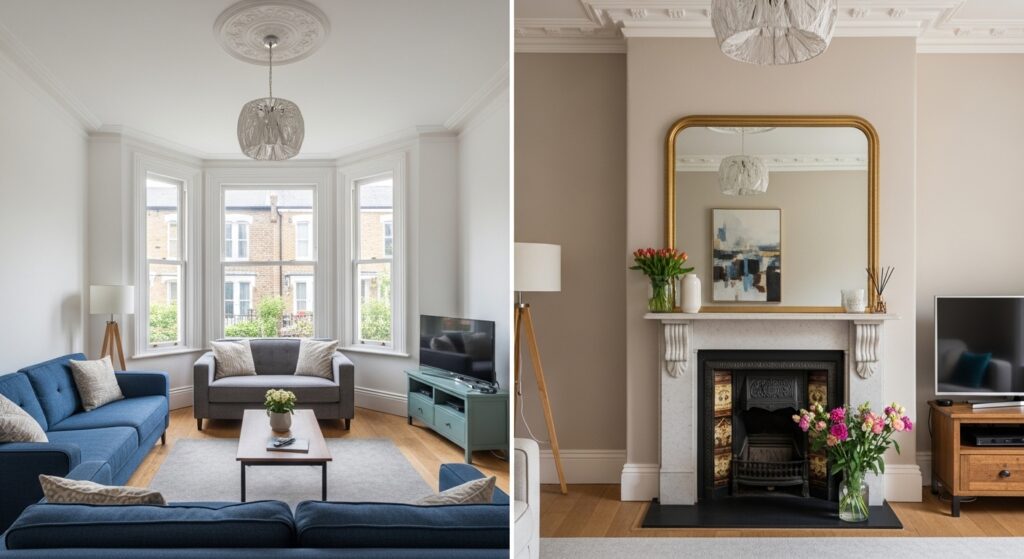
Residential vs Real Estate Photography: What's the Difference and Which Do You Need?
You search for a photographer to capture your London property. Within minutes, you find two very different types of professional offering what looks like a similar service — a residential interior photographer charging several hundred to several thousand pounds per shoot, and a real estate photographer offering full property coverage for a fraction of the price. On the surface, both produce photographs of homes. So why the price gap, and which one do you actually need?
The answer matters more than most people realise. Hiring the wrong type of photographer for your project results in either wasted budget on capabilities you do not need, or — far more commonly — disappointing images that fail to deliver the commercial outcome you were aiming for. This guide explains the difference clearly, and helps you decide which is right for your London property.
Real Estate Photography: What It Is and What It Does
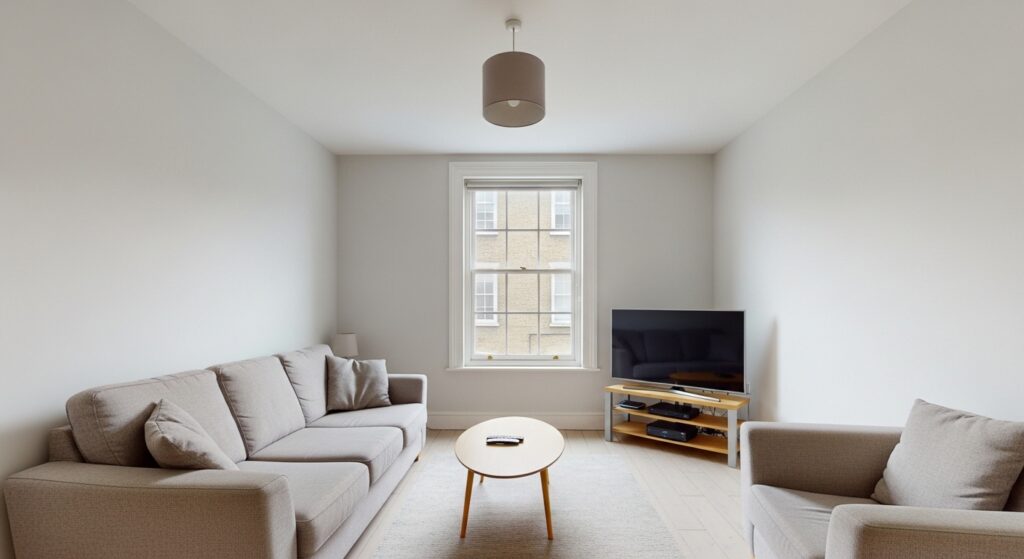
Real estate photography is built around a single goal: producing a complete set of property images, quickly and affordably, suitable for online listings on platforms like Rightmove, Zoopla, and OnTheMarket. A real estate photographer typically arrives at a London property, captures every room with a wide-angle lens, processes the images using consistent presets, and delivers within 24 to 48 hours.
This service is designed for volume and speed. The work is competent, the images are usable, and the cost per property is low — typically anywhere from £100 to £300 for a standard residential listing in London. For most everyday property listings, this is exactly what is needed.
Real estate photography is best suited for:
- Standard residential property listings being marketed for sale or rent through estate agents.
- Mid-market homes and flats where the goal is wide audience reach rather than premium positioning.
- High-volume agencies managing multiple listings simultaneously and needing fast, consistent turnaround.
- Buy-to-let properties where listing photography is functional rather than brand-led.
What real estate photography is not designed to do is produce imagery suitable for portfolios, press features, design awards, or premium marketing. The technique, the lighting approach, and the post-production are all calibrated for speed — not for the kind of detailed, considered work that elevates a property beyond its basic listing function.
Residential Interior Photography: What It Is and What It Does
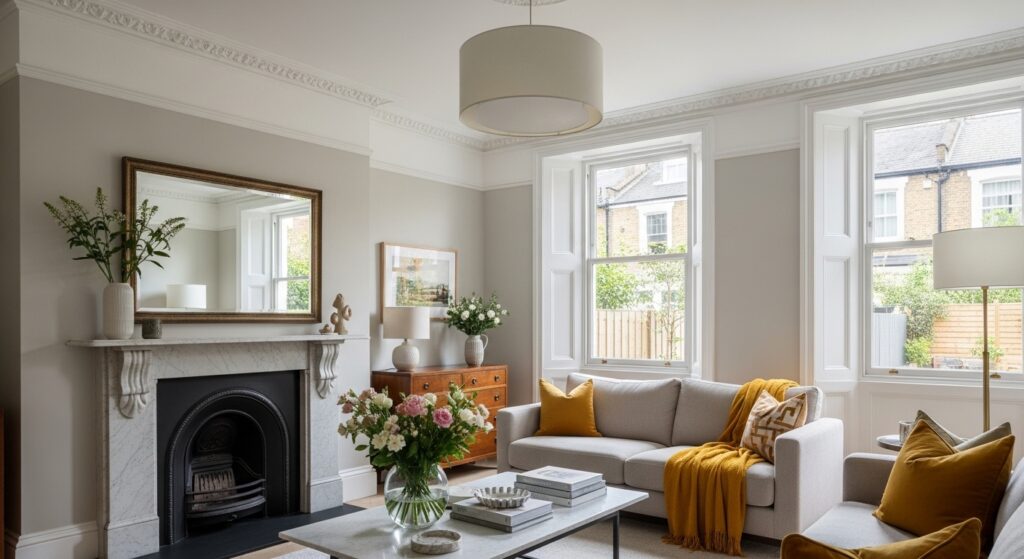
A residential interior photographer approaches the work very differently. The goal is not to document every room quickly — it is to produce a curated set of images that represent the space at its absolute best, with consideration given to composition, lighting, styling, and storytelling. Each frame is built deliberately. Lighting is balanced using a combination of natural and artificial sources. Specialist tilt-shift lenses correct vertical lines so walls do not lean unnaturally. Furniture may be subtly repositioned for the camera.
This is the discipline behind the best residential interior photography in the London market — the kind that appears in design publications, on architect and interior designer websites, and in the marketing materials of premium developers. A typical shoot takes a half day to a full day, and the deliverables are designed to work across multiple long-term uses.
Residential interior photography is best suited for:
- Interior designers and architects documenting completed projects for portfolios, press submissions, and award entries.
- Property developers marketing premium new-build schemes, show homes, and luxury London apartments.
- Estate agents handling prime London listings where the marketing demands a level of polish that justifies the asking price.
- Homeowners with design-led properties who want professional documentation of their home — for sale, for portfolio, or simply as a record.
- Brands and lifestyle publications commissioning content within real residential settings.
Residential vs Real Estate Photography: Side-by-Side Comparison
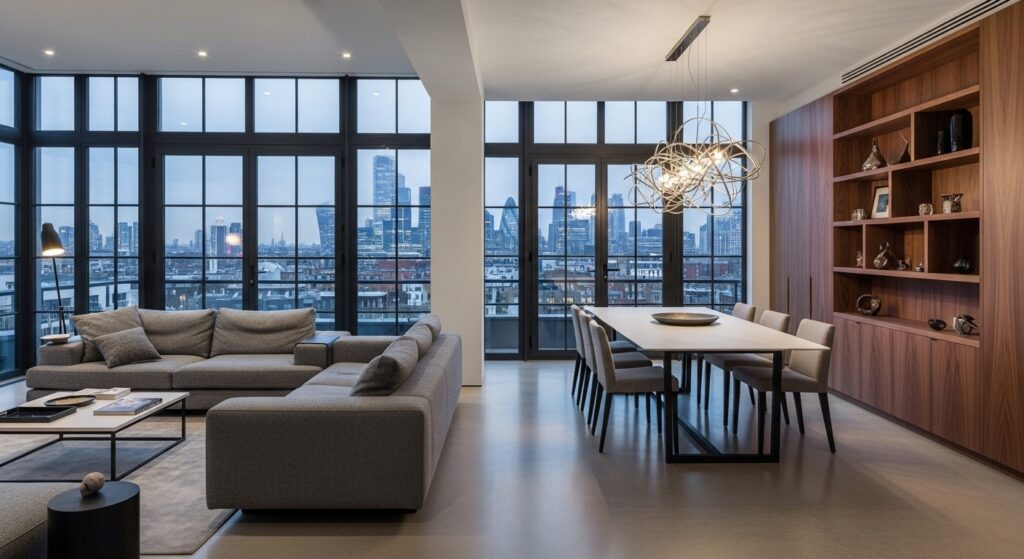
The clearest way to understand the difference is to compare them directly across the factors that matter to your project:
Factor | Real Estate Photography | Residential Interior Photography |
Primary purpose | Property listings | Brand, portfolio, premium marketing |
Time on site | 1–2 hours | Half day to full day |
Lighting approach | Natural light + flash on camera | Mixed natural, flash, continuous, balanced per room |
Equipment | DSLR, wide-angle lens | Medium format / full-frame, tilt-shift lenses |
Composition | Standard wide angles per room | Considered, varied, including detail and feature shots |
Styling | Minimal — homeowner-led | Considered, often with a stylist |
Post-production | Preset-based batch editing | Frame-by-frame retouching |
Typical London cost | £100–£300 | £600–£2,500+ |
Image lifespan | Until the property sells or relets | Years, across multiple uses |
How to Decide Which Type of Photographer You Need
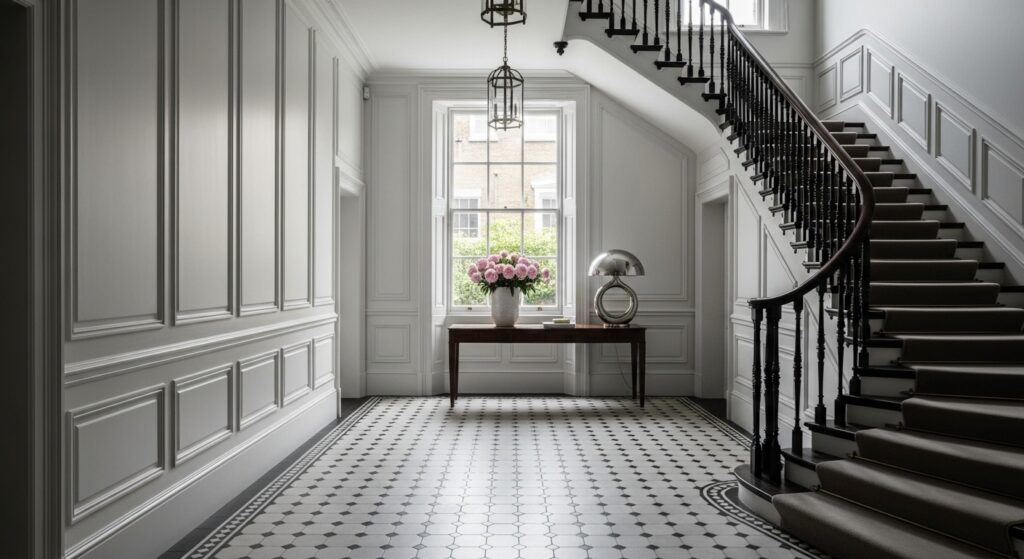
The decision usually comes down to three questions about your project:
- Who is the audience for the images?
If the images will be seen primarily on Rightmove, Zoopla, or local agency websites by a wide buyer audience, real estate photography is generally sufficient. If the images will be used in design portfolios, press features, award submissions, brand websites, or premium marketing campaigns, you need a residential interior photographer.
- How long do you need the images to work for you?
Real estate photography is created for the duration of a listing — once the property sells or relets, the images have served their purpose. Residential interior photography is created as a long-term asset. A well-shot interior set will support an interior designer’s portfolio for years, will be reused across press submissions, and will continue to deliver value long after the original brief.
- What is the perceived value of the property?
In London’s prime postcodes, premium pricing demands premium presentation. A £3 million townhouse listed with phone-quality real estate photography is unlikely to achieve full asking price — the disconnect between the property and the imagery undermines buyer confidence. The same property professionally photographed signals quality and supports the asking price.
For developers, designers, and architects working on premium London projects, the answer is almost always residential interior photography. For high-volume estate agency work on standard listings, real estate photography is the appropriate choice. For everything in between, the deciding factor is how long you want the images to keep working for you. To see the difference in finished output, view the residential photography portfolio at interiorphotographer.photos.
Frequently Asked Questions
Can a residential interior photographer also handle a property listing?
Yes — and the result will be considerably better than standard real estate photography. The trade-off is cost and turnaround. If your London property is high-value or design-led, this is usually worth it. For standard listings under £750,000, the value gap may not justify the higher fee, and a competent real estate photographer is often the more practical choice.
Will a real estate photographer’s images work for my interior design portfolio?
Almost never. Real estate images are designed for property listings, not portfolio use. The wide-angle distortion, the listing-style composition, and the batch-edited post-production rarely meet the standard required for design publications, award submissions, or press features. Most interior designers who try to use real estate photography in their portfolios end up commissioning a residential interior photographer later to redo the work.
How much should I expect to pay for residential interior photography in London?
Pricing varies by scope, but a typical residential interior photography shoot in London ranges from £600 for a smaller flat with a curated image set, up to £2,500 or more for a full-day shoot covering a larger home, exterior work, twilight shots, or lifestyle elements. Custom quotes reflect the size of the property, the number of final images required, the licensing terms, and whether a stylist is included.
Do residential interior photographers also shoot exteriors and architectural details?
Yes. Most experienced residential interior photographers also handle exterior, architectural, and detail photography as part of a full residential shoot. This produces a cohesive visual story across the entire property — interior, exterior, and the relationship between the two. See examples of this approach in the architecture portfolio at interiorphotographer.photos
Can the same photographer cover commercial spaces as well as residential properties?
Many do. Specialists who work across residential, hospitality, retail, and workspace photography bring a more sophisticated approach to all of them — because the skills translate. If your business needs photography across multiple property types, hiring one experienced residential interior photographer who covers all sectors gives you visual consistency across your brand. Joel Knight works across residential, hotel, restaurant, retail, workspace, and advertising photography projects.
Ready to Brief Your Residential Interior Photography Project?
Choosing the right type of photographer is one of the most important decisions in how your London property is presented. For everyday listings, real estate photography does the job. For anything where the image needs to do more — represent a brand, anchor a portfolio, support premium pricing, or work for years — a residential interior photographer is the right call.
Browse the residential portfolio to see examples of the work, then get in touch via the contact page to discuss your project. Joel Knight is a London-based residential interior photographer working with homeowners, designers, developers, and estate agents across London and the Home Counties.