
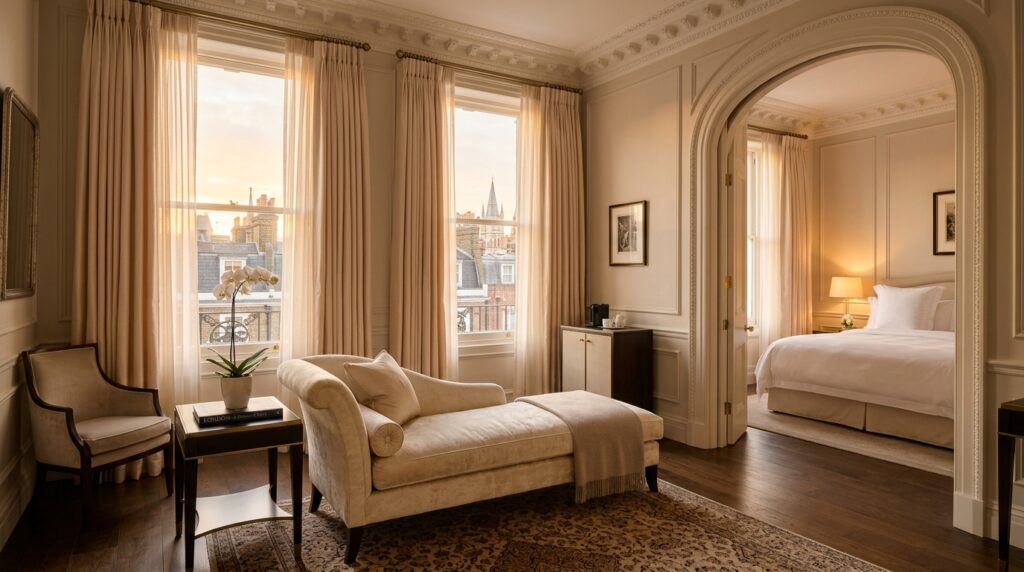
What Luxury Hotel Photography Actually Communicates to Guests Before They Book
A luxury hotel guest has already decided what kind of stay they want before they read a single word of your property description. They have made that decision based on your images — specifically, in the first three to five seconds of looking at them. Luxury hotel photography is not simply documentation of a beautiful space. It is the primary channel through which your property communicates quality, trust, and brand positioning to a guest who has not yet set foot inside. In London’s competitive five-star and boutique hotel market, the visual signals your imagery sends are either building the case for a booking — or quietly undermining it.
This post examines what those signals actually are, what guests are reading from your hotel marketing photography before they ever speak to your reservations team, and what separates imagery that converts at a premium rate from imagery that simply shows a nice room.
The Psychology Behind Luxury Hotel Photography and Booking Decisions
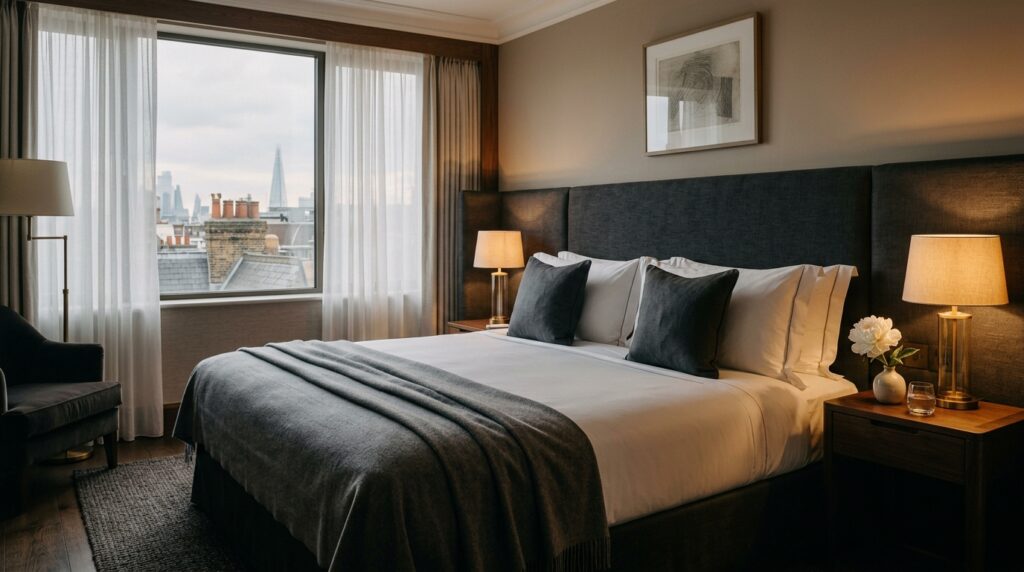
Guests booking luxury accommodation are not simply purchasing a room — they are purchasing a feeling, an identity, and an expectation of how they will be treated. Research by Skift found that visual content is the primary driver of initial property selection for luxury travelers, outweighing reviews, price, and brand reputation at the moment of first encounter. 1. The image comes first. Everything else is secondary.
This creates a specific challenge for luxury hotel photography: the images must do something more sophisticated than simply showing that a room is clean and attractive. They must communicate intangibles — warmth, craftsmanship, discretion, service culture—through entirely visual means. A hotel photographer working at this level is not recording a room. They are building a set of emotional cues that prime the guest for a specific kind of experience.
Nielsen Norman Group’s research on visual credibility shows that users form first impressions of websites in as little as 50 milliseconds—and that the quality of imagery is the single biggest factor in whether a luxury brand reads as credible or unconvincing at that moment. 2 For London hotels competing in the premium segment, this means the technical and creative quality of your photography is not a brand preference. It is a commercial prerequisite.
Five Things Your Luxury Hotel Photography Is Communicating Right Now
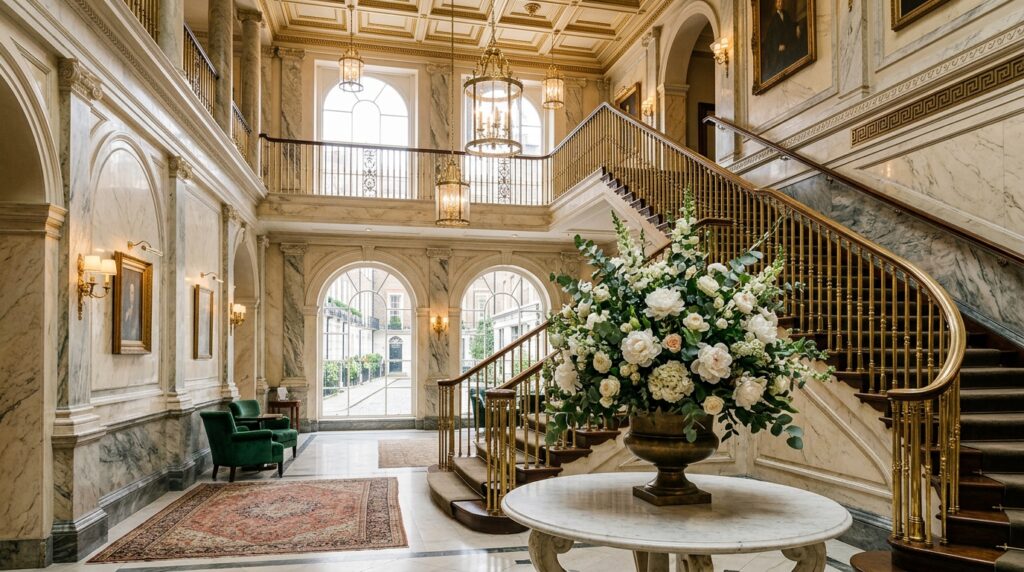
Whether intentionally or not, every image in your hotel’s gallery is communicating specific messages to potential guests. Here are the five most important — and what poor photography gets wrong on each one.
- The quality of your attention to detail
Luxury guests are detail-sensitive by nature — they notice the thread count of linen in person, and they notice its equivalent in photography. A crumpled throw, an uneven cushion arrangement, a half-open blind, or a smudge on a mirror that made it into the final image tells a guest precisely one thing: this property does not catch the details. Exceptional luxury hotel photography communicates the opposite. Every element in every frame is considered and deliberate — signalling that the same care applies to the stay itself.
- Whether the space will match expectations on arrival
Trust is the foundation of a luxury booking. A guest paying £800 or more per night in London needs to feel confident that the room they see in the photography is the room they will actually experience. Imagery that uses extreme wide-angle lenses to make rooms appear larger than they are, or heavy post-processing to boost apparent brightness, creates an expectation gap. That gap becomes a negative review. A skilled hospitality photographer London produces images that are aspirational but honest — capturing a room at its absolute best without misrepresenting it.
- Your brand’s relationship with light
Light is to a hotel room what silence is to a luxury car — the absence of the wrong kind, and the presence of the right kind, is what communicates premium. A bedroom that looks flat, harshly lit, or cold in its photography reads as a room managed by someone who does not understand atmosphere. A room where the photographer has balanced bedside lamp warmth with cool natural window light, and where the tones feel considered and intentional, signals a property that understands the craft of creating an environment.
- Scale and generosity
Guests associate physical generosity — space, height, width — with luxury. How your photography handles spatial proportion is a direct communication of value. An image that makes a 35 square metre London hotel suite feel intimate and enveloping is communicating generosity even within a compact footprint. An image that makes a 60 square metre suite feel cramped due to poor composition or a lens choice that distorts proportion is communicating the opposite — and undermining the room rate.
- Whether you take your own brand seriously
Perhaps the most important signal of all. A luxury hotel photography investment tells guests — implicitly, without a word — that you believe your property is worth the commitment of a serious, well-produced visual campaign. Cornell Hospitality Quarterly research confirms that perceived investment in visual brand presentation correlates directly with guest confidence in a property’s quality management.3 Underinvesting in photography sends the inverse signal: that the property is not confident enough in its own quality to show it properly.
What Excellent Luxury Hotel Photography Services Deliver
Understanding what guests are reading from your imagery is only useful if you know what to do about it. Here is what a properly commissioned set of luxury hotel photography services delivers — and why each element matters commercially.
Medium format image quality
Medium format cameras — the professional standard for luxury hospitality photography — capture tonal depth, texture detail, and colour accuracy that a standard DSLR cannot replicate. The difference is visible to any trained eye, and often perceptible subconsciously to guests who cannot articulate why one hotel’s images feel more premium than another’s. The answer is almost always the camera.
Precision multi-source lighting
A London hotel room presents a complex lighting environment: daylight from windows, ceiling lighting, bedside lamps, bathroom downlights, and sometimes candlelight or fire — all at different colour temperatures and intensities. A specialist hotel photographer balances all of these sources so the final image feels like a natural, beautiful moment rather than a lit studio set. This is technical work that takes time, and it is why great hotel photography cannot be rushed.
Honest representation with maximum appeal
Every composition decision — lens choice, camera height, angle relative to windows — affects how a room reads. A specialist hospitality photographer makes these decisions with dual intent: to show the room accurately, and to show it as beautifully as possible within that accuracy. This combination, done well, is what builds the trust that converts a browser into a booker.
A cohesive visual narrative across the full property
The most effective hotel marketing photography does not produce a collection of standalone room images — it tells a coherent story about what it feels like to stay at your property. From the moment of arrival at the entrance to the last image of the spa or rooftop bar, each photograph should feel like it belongs to the same visual world. This consistency is what makes a hotel’s gallery feel considered rather than assembled.
The Cost of Getting Luxury Hotel Photography Wrong
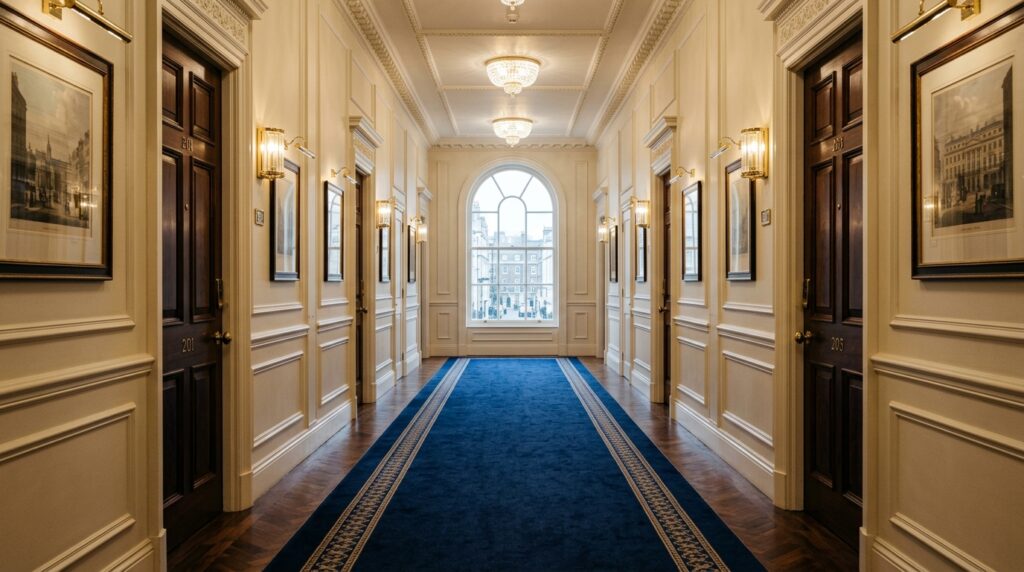
The risks of poor luxury hotel photography are not abstract — they are measurable and significant. Expedia Group’s lodging partner research found that hotels upgrading from low-quality to professional photography saw meaningful increases in click-through rate on OTA listings and meaningful reductions in cost-per-booking through direct channel improvements.4 The inverse is equally true: maintaining poor imagery in a competitive market is a sustained revenue leak.
For London’s luxury and boutique hotel sector specifically, the stakes are high. A guest choosing between four or five comparable properties in the same postcode is making a visual decision. If your imagery is the weakest in that comparison set, you are losing bookings to competitors whose rooms may be no better than yours — but whose photography is.
The specific risks poor luxury hotel photography creates:
- OTA underperformance. Lower click-through rates on Booking.com, Expedia, and other platforms reduce visibility over time, as these platforms’ algorithms favour properties with higher engagement.
- Rate erosion. Properties whose imagery does not support their room rate attract discount-seeking guests rather than the premium audience they are priced for, leading to negotiated rate reductions and promotional dependency.
- Review mismatches. When the experience does not match an overpromised visual, the review reflects that. When the photography is honest and excellent, guest arrivals matching expectations produce consistently positive reviews.
- Press and PR missed opportunities. Publications and travel media commissioning features on London hotels require a specific standard of imagery. Properties without it are quietly passed over, regardless of the quality of the physical property.
Frequently Asked Questions
How does luxury hotel photography differ from standard hotel photography?
The difference is in the standard of technical execution, the time invested, and the creative approach. Luxury hotel photography uses medium format equipment, multi-source lighting setups that take significantly longer to establish per room, frame-by-frame post-production rather than batch editing, and a compositional approach that treats every element in the frame as a considered design decision. Standard hotel photography is calibrated for speed and coverage. Luxury hotel photography is calibrated for impact and longevity.
How do I brief a hotel photographer for a luxury property?
The best briefs for luxury hotel photography services start with the guest, not the room. Describe the type of person who stays at your property, what they value, what they are anticipating, and how they will use the imagery — on your website, on OTAs, in press pitches, on social media. A specialist hospitality photographer London will use this context to make every creative decision — composition, lighting mood, styling details — in service of that specific guest’s expectations.
Should every room category be photographed individually?
For luxury properties, yes. Every room category at a premium hotel represents a distinct price point and a distinct promise. Guests selecting between a classic room, a superior room, a junior suite, and a suite are making visual comparisons — and each category’s imagery needs to make the case for its own rate. Generic or cross-applied imagery undermines the perceived differentiation between categories and depresses upgrade revenue.
How important is lifestyle photography for luxury hotels?
Very. Pure interior photography shows guests what a space looks like. Lifestyle photography shows them what it feels like to be there. For luxury properties, the emotional dimension of the stay — the unhurried breakfast, the evening in the bar, the moment of walking into a suite — is a significant part of what guests are purchasing. A complete luxury hotel photography brief includes both. View examples of this approach in the lifestyle photography portfolio at interiorphotographer.photos
How should luxury hotel photography be refreshed over time?
As a minimum, the core property gallery should be fully refreshed every three to four years, or immediately following any refurbishment or rebrand. Beyond this, seasonal content for F&B spaces, outdoor areas, and event venues should be updated annually. The most commercially active luxury London hotels maintain a continuous programme of hotel marketing photography — treating their visual assets as a live campaign rather than a fixed library.
Commission Your Luxury Hotel Photography Project
Every image in your hotel’s gallery is already communicating something to potential guests — the question is whether it is communicating what you intend. Properly commissioned luxury hotel photography transforms that communication from passive to persuasive: building trust, supporting your room rate, and converting the right guests into bookers before they have spoken to anyone at your property.
Browse the full hotel photography portfolio and lifestyle photography portfolio at interiorphotographer.photos, or get in touch via the contact page to discuss your brief. Joel Knight is a London-based hospitality photographer working with five-star properties, boutique hotels, and luxury operators across London and internationally.
REFERENCES & CITATIONS
- Skift Research (2023). The State of Luxury Travel: Visual Content and Booking Behaviour. skift.com/research. [Industry research — visual content as primary driver of luxury property selection.]
- Nielsen Norman Group (2022). First Impressions of Websites: The Role of Visual Design. nngroup.com. [UX research — 50ms first-impression formation and imagery as credibility signal.]
- Kim, M. & So, K.K.F. (2021). Visual brand investment and perceived quality management in hospitality. Cornell Hospitality Quarterly, 62(3), 278–293. journals.sagepub.com/home/cqx. [Peer-reviewed: visual brand investment as a proxy for quality management confidence.]
- Expedia Group (2023). Lodging Partner Research: Photography Quality and Booking Performance. expediagroup.com/partners. [Industry data — photography quality upgrade impact on OTA click-through and direct booking rates.]