
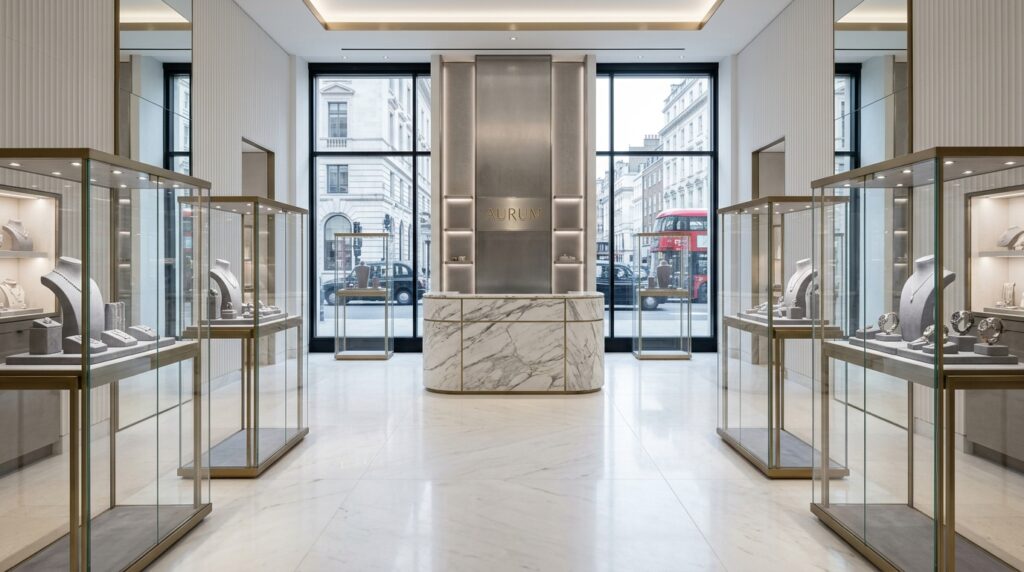
A customer decides whether to walk into a store before they reach the door. For most London retailers today, that decision is made online — on a brand website, a Google search result, an Instagram post, or a shopping platform listing. The visual quality of your store’s imagery is the single factor most within your control that determines whether a browser becomes a visitor, and whether a visitor becomes a buyer. A professional retail interior photographer produces the images that make that first impression work commercially — communicating your store’s identity, quality, and character to a potential customer who has never set foot inside.
This post explains how professional retail interior photography directly affects both footfall and online engagement for London retailers, what it needs to achieve to do that job effectively, and what to look for when commissioning the work.
Why Retail Interior Photography Is Now a Footfall Driver, Not Just a Brand Asset
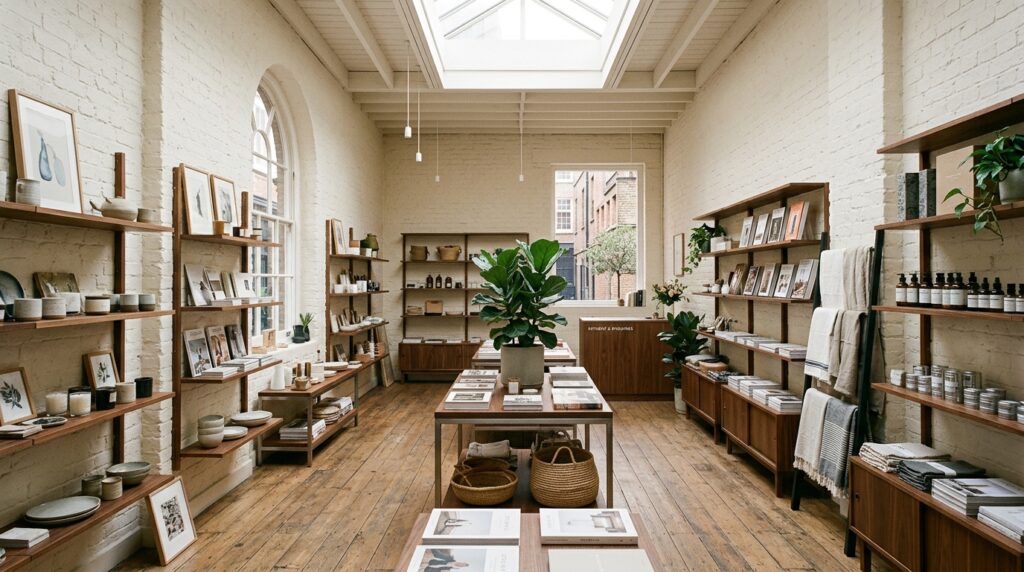
The relationship between online visual content and in-store footfall has shifted fundamentally over the past decade. CBRE’s annual retail market report identifies visual digital content as one of the top three drivers of in-store visit intent among London shoppers, with over 70% of consumers researching a physical retail destination online before deciding to visit.1 For London’s retail sector — where rents are among the highest in the world and the margin between a successful and underperforming store is often measured in footfall rather than conversion — this makes your digital imagery a direct commercial lever.
The dynamic is most pronounced at the premium end of the market. A shopper considering a visit to a Knightsbridge boutique, a Marylebone independent, or a Soho concept store is making a considered choice — and the imagery they find when researching that choice is doing the same work that a shop window used to do on the high street. A retail interior photographer who understands this produces images that function as digital shop windows: compelling enough to earn the visit, and accurate enough to deliver on the expectation they create.
The channels through which retail store photography drives footfall each operate differently and require images calibrated to their own demands:
- Google Business Profile and Maps. The most visited pre-visit touchpoint for London retail. Properties with strong professional imagery appear more credible in local search, generate higher click-through rates, and drive more direction requests — the metric most directly correlated with in-store footfall.
- Brand website and e-commerce. For retailers operating both physical and digital channels, the quality of in-store imagery shapes perception of both. Customers who experience the store online before visiting arrive with higher purchase intent.
- Instagram and Pinterest. Visual discovery platforms that function as primary research channels for fashion, homewares, beauty, and lifestyle retail. A single outstanding retail space photography image can generate more store visits than a week of paid social advertising.
- Press and editorial. The Evening Standard, Time Out London, Vogue, and lifestyle publications regularly feature London retail spaces. Without professionally produced imagery at editorial standard, your store is invisible to commissioning editors regardless of how distinctive the physical space is.
What Retail Interior Photography Needs to Communicate to Drive Engagement
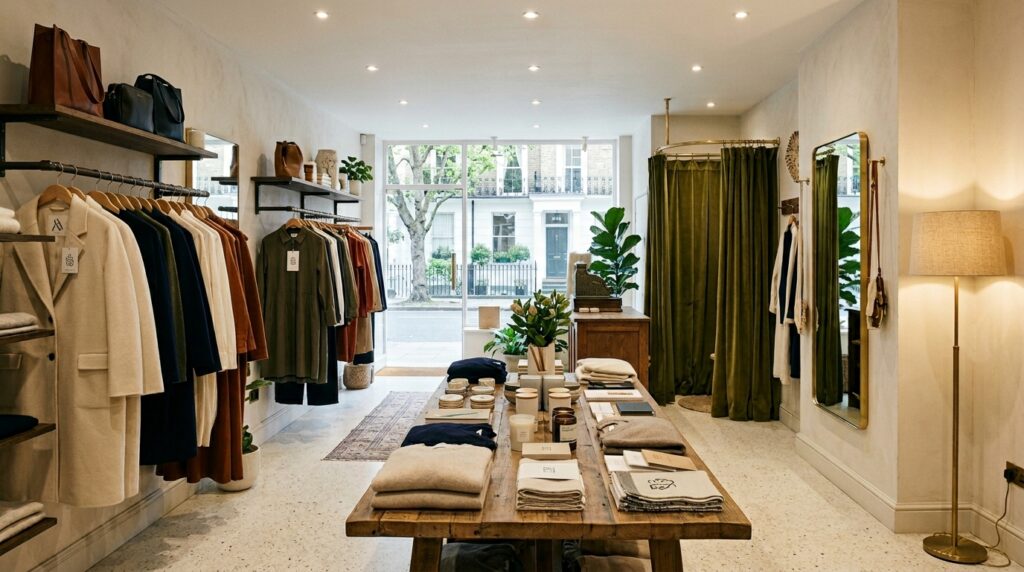
Retail Gazette’s consumer behaviour research found that shoppers make a subconscious assessment of a retail brand’s quality, price point, and suitability within the first three seconds of viewing its imagery — and that this assessment is remarkably difficult to reverse through subsequent content or messaging.2 This places enormous commercial weight on what your retail interior photography communicates in that first moment of encounter.
The specific signals your retail imagery needs to send depend on your brand positioning, but the following are consistent across all London retail categories:
Brand tier and price point
A customer browsing online needs to instantly understand whether your store is in their consideration set. The materials visible in a retail space photography image — the flooring, fixture finishes, lighting specification, and density of product on display — all communicate brand tier before a single word is read. A specialist retail interior photographer understands how to frame and light each of these elements so they work together as a coherent signal of brand positioning.
The experience of visiting in person
Footfall is driven by anticipation. A customer who can imagine what it will feel like to walk into your store — the scale, the atmosphere, the sensory environment — is significantly more likely to visit than one who cannot. Wide architectural compositions showing the full spatial experience, combined with detail shots communicating tactile quality, together create that anticipation.
Visual merchandising and product in context
Product displayed in a beautifully photographed store environment communicates desirability far more effectively than the same product on a white background. Retail photography London that captures the relationship between the space and the product — how the store has been designed to present and elevate what it sells — is the most commercially effective approach for driving both footfall and online engagement.
Seasonal and campaign relevance
A store that looks identical in every image throughout the year communicates a brand that is not actively curated. Professional retail imagery updated seasonally — new collections in context, seasonal window displays, event or launch configurations — signals to both customers and press that the store is alive, relevant, and worth returning to.
How a Retail Interior Photographer Plans and Executes a Store Shoot
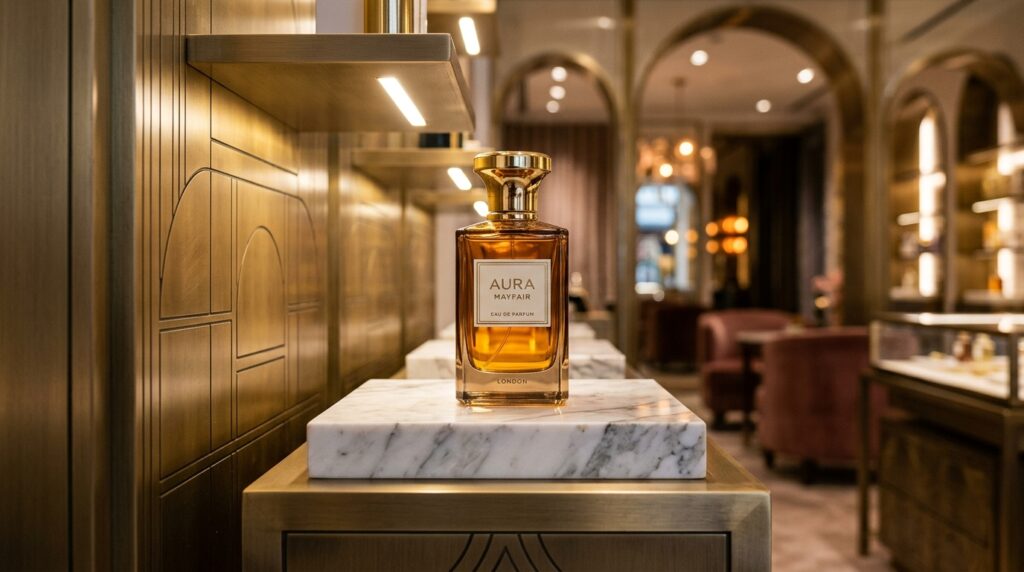
Savills Retail’s analysis of flagship and premium retail development identifies visual presentation quality as a primary factor in brand equity for physical retail — and notes that stores with consistently high-quality digital imagery command higher brand value ratings in consumer surveys than those with inconsistent or lower-quality visual presence.3 The production process behind that quality is worth understanding before you commission the work.
Pre-shoot visual merchandising brief
Before the shoot day, a specialist retail interior photographer will review your store’s current visual merchandising, brand guidelines, and specific commercial objectives. This brief determines which areas of the store to prioritise, how to configure product displays for camera, and which composition styles will best serve the brand’s positioning. The pre-shoot brief is the single most important investment of time in the entire production process.
Lighting design and execution
Retail spaces present complex lighting environments: fluorescent overhead lighting combined with accent spotlights, window light competing with interior lighting, and product display lighting designed for drama rather than photographic evenness. A professional retail photographer London brings supplementary lighting to balance these sources — ensuring every area reads clearly and attractively, with the warmth and character of the space preserved rather than flattened.
Wide, mid-range, and detail shots
A complete set of retail interior photography covers three distinct scales: wide architectural shots showing the full store environment; mid-range shots showing the relationship between product, display, and space; and close detail shots communicating material quality and craftsmanship. Each scale serves a different platform and a different moment in the customer’s decision journey.
Exterior and storefront photography
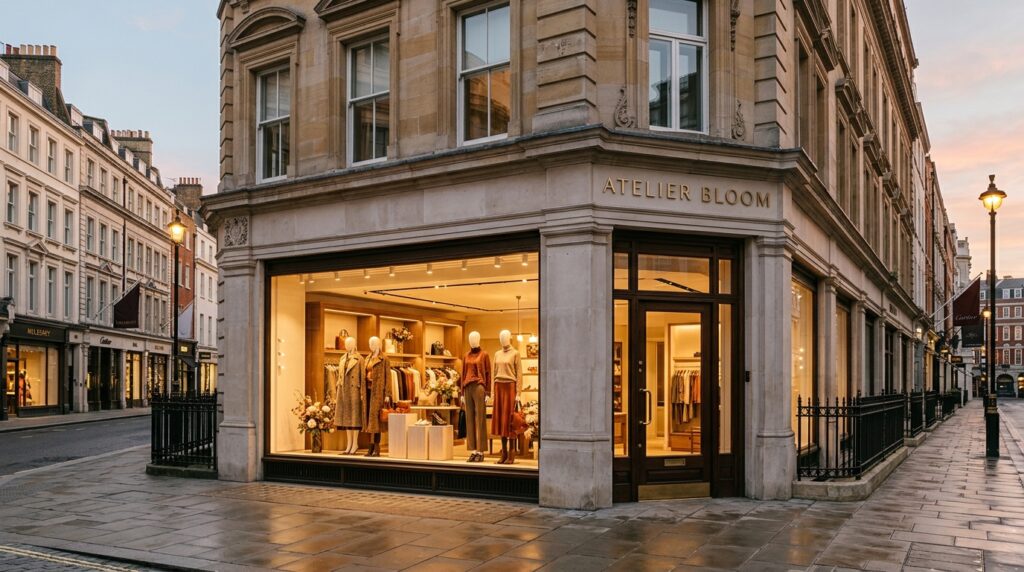
For London retailers, the exterior is as commercially important as the interior. A beautifully photographed storefront — showing the relationship between the store’s identity and its London location, whether a Georgian facade in Marylebone, a converted railway arch in Bermondsey, or a flagship on Bond Street — creates a sense of place that drives visit intent and supports press coverage.
The Online Engagement Impact of Professional Retail Interior Photography
Baymard Institute’s research on e-commerce and brand website behaviour found that product and store imagery quality is the primary factor in time-on-site for retail brand websites — with higher-quality imagery producing meaningfully longer session durations, lower bounce rates, and higher conversion from browse to purchase.4 For London retailers operating omnichannel, this means investment in retail interior photography pays back across both physical and digital channels simultaneously.
The online engagement impact compounds across three specific dimensions:
Website session quality and conversion
A brand website featuring professional retail space photography holds visitors for longer, reduces bounce rate, and increases the likelihood of a purchase or store visit. The images are not decorating the website — they are doing commercial work on every page they appear on. For London retailers with an e-commerce function, the halo effect of strong in-store photography on product page conversion is one of the most underappreciated returns on the investment.
Social media reach and saves
Professional retail store photography consistently outperforms phone photography on the social metrics that drive organic reach: saves, shares, and profile visits. A saved image — one that a user stores for later reference — is the strongest signal of purchase intent available on Instagram and Pinterest. Building a library of save-worthy retail interior photography is the most sustainable approach to organic social growth for a London retail brand.
Press and influencer coverage
Retail editors, lifestyle journalists, and content creators make coverage decisions based on the visual standard of a brand’s imagery. Without professional photography at editorial standard, London retailers are effectively invisible to this channel — regardless of the quality of the physical store or the product. A single press feature in a national title, driven by the quality of your store imagery, can generate footfall equivalent to months of paid social advertising.
Frequently Asked Questions
How do I prepare my store for a retail interior photography shoot?
Preparation begins several days before the shoot. All surfaces should be clean and polished, product displays fully stocked and freshly merchandised, and any maintenance issues visible on camera addressed beforehand. Treat the shoot day as the most important day your store will be photographed. A specialist retail interior photographer will provide a specific preparation brief ahead of the shoot based on your store’s configuration and intended use of the imagery.
How many images does a retail photography shoot typically produce?
A full day retail photography London shoot for a mid-size London store typically delivers between 50 and 80 finished images across all scales and formats — wide architectural shots, mid-range merchandising images, detail shots, and exterior photography. For flagship or multi-level stores, a two-day shoot is often more appropriate. The number of finished images should be agreed at briefing stage alongside the intended channels and formats.
Should a stylist be involved in the retail photography shoot?
For fashion, homeware, and lifestyle retail, a stylist adds significant value — ensuring every product and display element is presented at its best for camera, and that the visual merchandising in each shot tells a deliberate story. For premium and luxury retail brands, a stylist is often essential rather than optional. Your retail interior photographer can advise at briefing stage whether a stylist is recommended for your specific brief and brand tier.
Can retail interior photography be used across both physical and online channels?
Yes — and this is the primary commercial case for commissioning professional retail interior photography rather than using phone content or user-generated images. A single professional shoot produces imagery that works simultaneously across your brand website, Google Business Profile, social media, press and PR, and print or out-of-home advertising. Nielsen Norman Group’s research on visual content consistency found that brands presenting a consistent visual identity across physical and digital channels achieve significantly higher customer trust and purchase intent. 5 A professional shoot delivered in the right formats serves all of these channels from a single investment.
How often should retail photography be updated?
At a minimum, a full retail store photography shoot should be commissioned at any point of significant change — a store refurbishment, a new collection launch, a seasonal campaign, or a brand repositioning. For active social media programs, supplementary content shoots every quarter keep the library fresh and ensure seasonal campaigns have original imagery. For press and PR purposes, having a current and comprehensive image library available at all times is essential—commissioning photography reactively when a press inquiry arrives is almost always too late.
Commission Your Retail Interior Photography Shoot in London
Your store’s visual presence is a commercial asset that drives footfall, supports online conversion, and represents your brand in every channel where a potential customer encounters it. A professional retail interior photographer produces imagery that does all of this simultaneously: building brand credibility, earning press coverage, and creating the digital shop window that turns online browsers into in-store visitors.
Browse the full retail photography portfolio, the architecture photography portfolio, and the advertising photography portfolio at interiorphotographer.photos, then get in touch via the contact page to discuss your brief. Joel Knight is a London-based retail interior photographer working with independent boutiques, luxury brands, and retail groups across London and beyond.
REFERENCES & CITATIONS
- CBRE (2023). UK Retail Market Report: Consumer Behaviour and Digital Discovery. cbre.com/insights. Cited in H2 Section 1. [70% of London consumers researching physical retail online before visiting; visual content as top three driver of visit intent.]
- Retail Gazette (2023). Consumer Visual Brand Assessment in UK Retail. retailgazette.co.uk. Cited in H2 Section 2. [Three-second brand quality assessment from imagery and resistance to reversal through subsequent content.]
- Savills (2023). Flagship Retail and Brand Equity: Visual Presentation Standards in London. savills.com/research. Cited in H2 Section 3. [Visual presentation quality as primary factor in brand equity for physical retail and consumer brand value ratings.]
- Baymard Institute (2023). E-Commerce UX: Product and Store Imagery Quality and Session Behaviour. baymard.com/research. Cited in H2 Section 4. [Imagery quality as primary factor in time-on-site, session duration, bounce rate, and conversion for retail brand websites.]
- Nielsen Norman Group (2022). Visual Identity Consistency Across Physical and Digital Retail Channels. nngroup.com. Cited in H2 Section 5 FAQs. [Consistent visual identity across physical and digital channels producing higher customer trust and purchase intent.]