
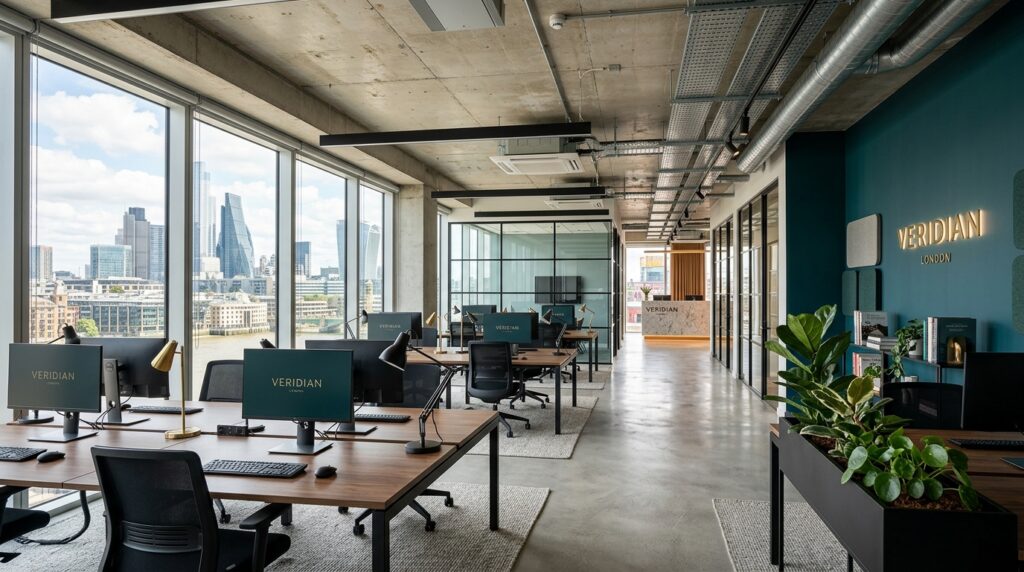
A prospective client visits your website before they agree to a meeting. A candidate reviews your LinkedIn page before they accept an interview. In both cases, the quality of your workspace photography is doing significant work on behalf of your business before a single conversation has taken place. A professional office interior photographer produces imagery that communicates your company’s culture, ambition, and professional standard to both audiences simultaneously. For London businesses competing for premium clients and skilled talent in one of the world’s most competitive commercial markets, the visual quality of your workspace presentation is not a secondary marketing concern. It is a primary commercial one.
This post explains how professional office interior photography directly affects client acquisition and talent attraction, what it needs to communicate to do that effectively, and what London businesses should consider when commissioning the work.
Why Office Interior Photography Is a Client Acquisition Tool, Not Just a Brand Asset
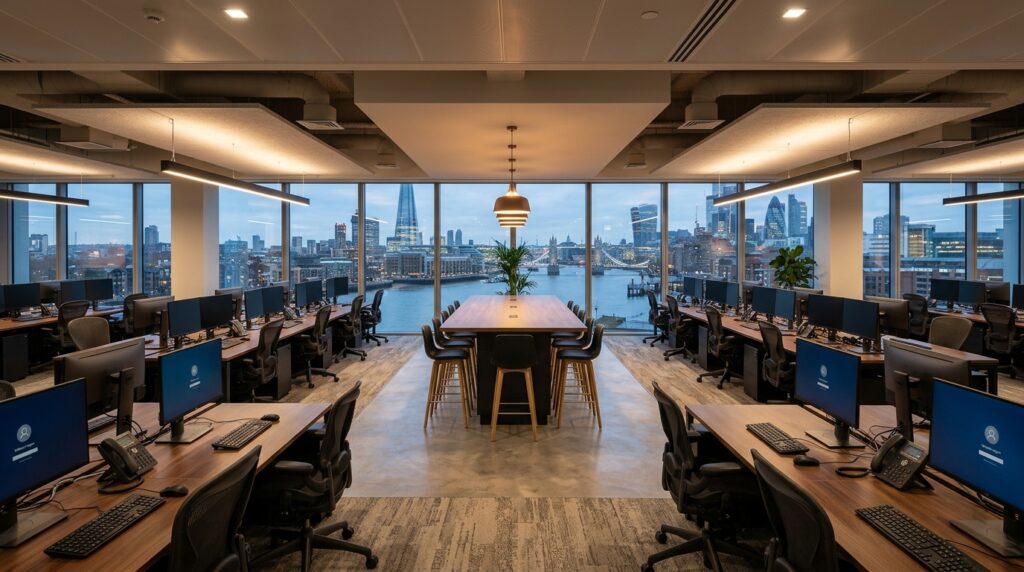
As Savills’ London office market research1 consistently demonstrates, the physical quality and presentation of a commercial workspace is among the top five factors cited by businesses when selecting professional service providers. Clients use office environments as a proxy for capability, investment, and attention to detail. A workspace that photographs as considered and well-designed signals a business that brings the same qualities to its client work.
The mechanism is direct. A potential client researching professional service firms in London visits multiple websites before shortlisting. If one firm presents its workspace through professional office space photography and another presents it through phone snapshots or no imagery at all, the firm with professional photography is perceived as more established, more capable, and more worthy of a premium fee. The photography is not showing them the office. It is showing them what kind of business they are dealing with.
The client-facing channels where workspace photography actively drives acquisition include:
- Company website. The primary research destination for prospective clients. An About Us page, a Careers page, or a Contact page featuring professional workspace imagery communicates the company’s physical investment in its people and environment before a word of the body copy is read.
- LinkedIn. The most visited professional network for B2B client research in London. Companies with professionally produced workspace imagery in their LinkedIn presence consistently receive more profile views and more direct enquiries than those without.
- New business pitches and credentials documents. A credentials deck featuring professional office photography London reinforces every claim made about the company’s capabilities with visual evidence of the environment in which that work is produced.
- Press and trade media. Business and trade publications regularly feature London office environments as part of company profiles and sector roundups. Professional imagery is a prerequisite for editorial consideration.
How Workspace Interior Photography Affects Talent Attraction
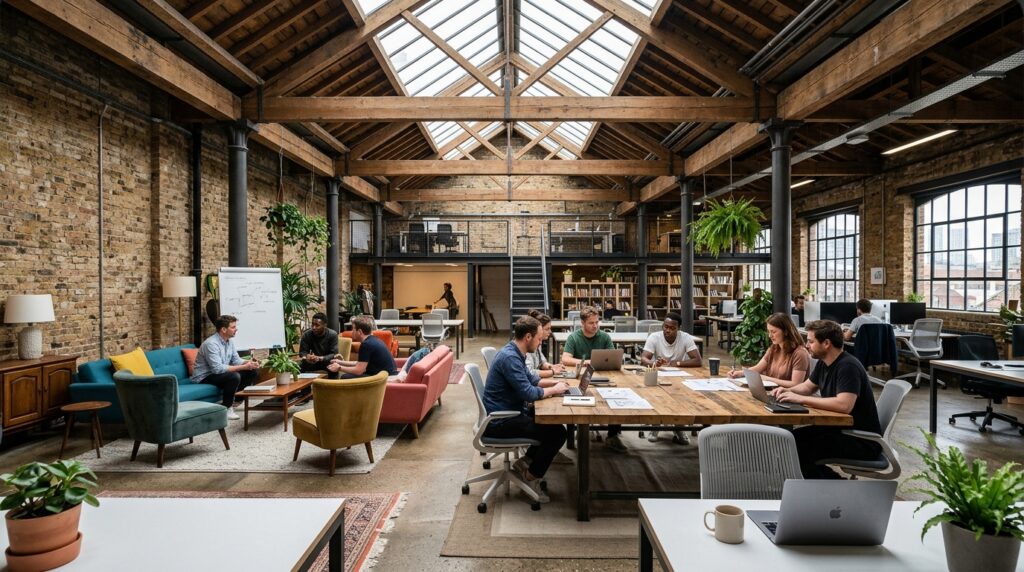
As CBRE’s UK workplace experience report2 identifies, the physical workspace environment is one of the top three factors influencing candidate decision-making when evaluating a job offer, with candidates in skilled professional roles placing significant weight on the quality and character of the environment in which they will spend the majority of their working week. For London businesses hiring in competitive sectors including technology, finance, law, design, and media, the workspace photography visible on career pages and social channels is actively influencing candidate shortlisting decisions.
Professional workspace interior photography communicates several specific signals that candidates use to evaluate a potential employer:
Investment in people
A beautifully photographed workspace communicates that a business invests in the physical environment its people work in. This is read by candidates as a proxy for how the business invests in its people more broadly. A considered, well-designed office photographed at a professional standard signals a company that takes its culture and working environment seriously.
Company culture and working style
The specific character of a workspace, whether collaborative and open, quiet and focused, creative and informal, or structured and corporate, communicates culture before any employer branding copy does. A specialist office interior photographer captures the specific character of a workspace through composition, lighting, and the careful inclusion of the human elements that define it, without requiring people to be present in every frame.
Ambition and growth trajectory
A well-designed and professionally photographed London office communicates a company that is growing, investing, and confident in its future. Candidates evaluating two similar roles will consistently lean towards the company whose workspace communicates ambition and quality over the one whose imagery communicates stasis or underinvestment. Office space photography is one of the clearest signals of growth trajectory available to a business without making an explicit claim about it.
Location and environment
For London businesses, the relationship between the workspace and its location is part of the talent proposition. A Clerkenwell creative studio, a Canary Wharf financial services office, a Shoreditch technology company, and a Mayfair professional services firm all communicate different things about who works there and what working there feels like. Professional photography that captures the relationship between the workspace and its London context makes that proposition tangible for a candidate who has not yet visited.
What an Office Interior Photographer Captures to Serve Both Audiences
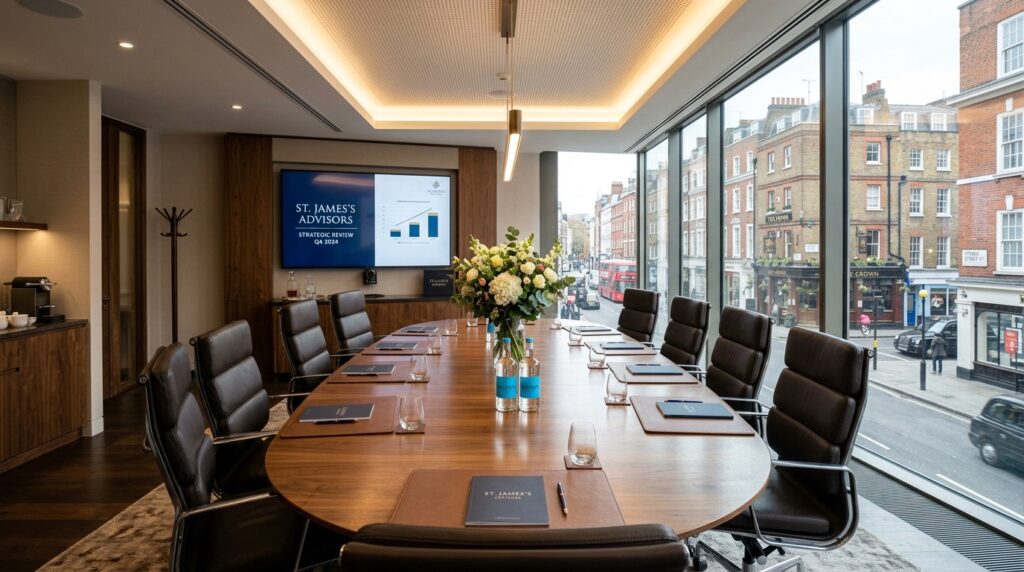
As Deloitte’s workplace and talent experience study3 notes, the most effective employer brand content combines physical environment imagery with an authentic representation of the working culture it enables. For an office interior photographer working in a London commercial context, this means producing a library that covers several distinct visual narratives within a single shoot day.
Reception and arrival experience
The reception area is the first physical touchpoint for a visiting client and the first visual impression a candidate forms on their interview day. A well-photographed reception communicates scale, brand, and investment. For London professional services firms and corporate businesses, the reception shot is often the most commercially important single image in the full workspace library.
Collaborative and meeting spaces
Meeting rooms, boardrooms, and breakout spaces are the environments where client work actually happens. Photographing these spaces with the same care and precision as the wider office communicates to a prospective client that the infrastructure for their engagement is well-considered. For talent attraction, collaborative spaces signal a working culture that values interaction, creativity, and team investment. A specialist workspace interior photography shoot covers all of these spaces systematically, not selectively.
Desk environments and working areas
Open plan working environments, hot-desking configurations, and individual desk setups each communicate a different working culture. Photographing these areas in a way that reads as energetic, well-resourced, and professionally managed requires careful preparation and a lighting approach that flatters the space without misrepresenting it. An experienced office photography London specialist understands how to make a working floor read as dynamic rather than simply busy.
Amenity and social spaces
Kitchens, dining areas, terrace spaces, and informal social zones have become significant components of the London office talent proposition. These spaces communicate that a business understands the importance of rest, social connection, and quality of working life beyond the desk. Including them in a professional shoot adds a human dimension to the workspace library that purely corporate imagery cannot achieve.
Exterior and building context
For London businesses whose location is part of their brand proposition, the relationship between the workspace and its building or street context adds significant value to the image library. A converted Victorian warehouse in Bermondsey, a contemporary glass building in the City, or a Georgian townhouse in Fitzrovia each communicate something specific about the businesses that operate within them. An experienced corporate interior photographer London captures this context as a deliberate part of the brief.
The Commercial Return on Professional Office Interior Photography
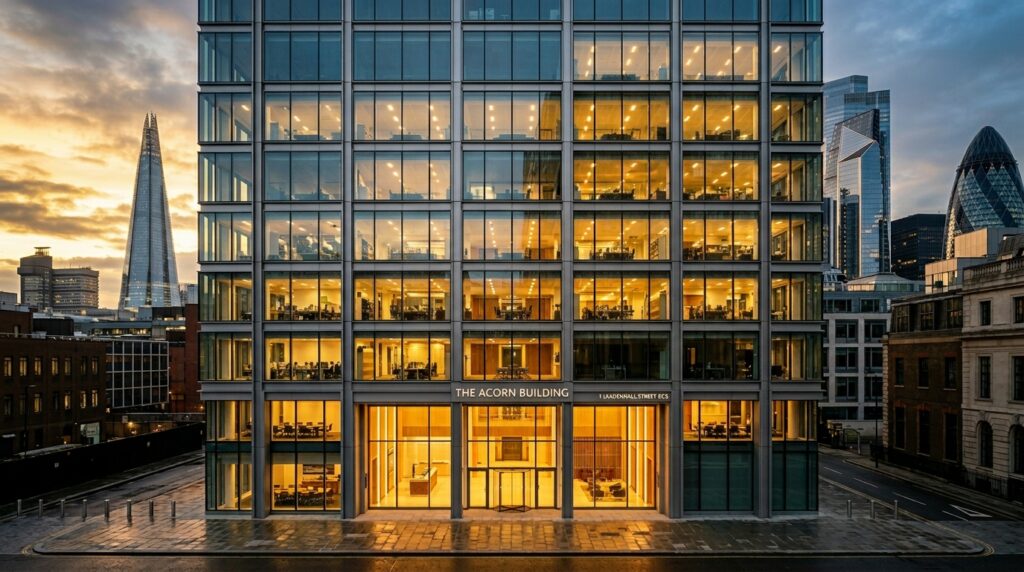
The return on investment in professional office interior photography is measurable across both client acquisition and talent attraction, and it compounds over time rather than diminishing. As Baymard Institute’s research on visual content and professional credibility4 confirms, the quality of imagery on a professional services website is the primary visual credibility signal that prospective clients use to assess whether a business is at the level they require. For London businesses operating at the premium end of their sector, this credibility signal is not supplementary to the value proposition. It is part of it.
The commercial return shows up across three specific dimensions:
Increased website engagement and enquiry quality
A professional services website featuring high quality office space photography holds visitors for longer, reduces bounce rate, and generates more direct enquiries from prospective clients. The imagery is not decorating the website. It is establishing the context in which everything else on the website is read. A credentials claim that appears on a page with poor or absent workspace photography is less credible than the same claim appearing alongside professional imagery of the environment in which the work is produced.
Reduced time to hire and higher offer acceptance rates
Businesses that invest in professional workspace interior photography for their careers pages and LinkedIn presence consistently report shorter recruitment cycles and higher offer acceptance rates than those without. Candidates who have seen a well-presented workspace before their interview arrive with a positive prior impression that reduces their uncertainty and increases their likelihood of accepting an offer. The photography is doing pre-sell work on talent that a recruiter cannot replicate through description alone.
Media and thought leadership visibility
Business media, property trade publications, and workplace design press regularly feature London office environments as part of sector coverage, company profiles, and design features. Professional office interior photography is a prerequisite for this coverage. Businesses that maintain a current and high-quality workspace image library are consistently more visible in editorial coverage than those without, and that visibility compounds into brand authority that supports both client acquisition and talent attraction over time.
Frequently Asked Questions
How do I prepare our office for a professional photography shoot?
Preparation for a professional office interior photography shoot begins several days in advance. All desks should be cleared of personal items, cables, and everyday clutter. Meeting rooms should be set with clean glassware and fresh stationery. Reception areas should be freshly arranged with any branded elements properly displayed. Kitchens and amenity spaces should be clean and well-stocked. The goal is to present the office at its best version of itself, not a staged version that bears no resemblance to the working environment. A specialist office interior photographer will provide a detailed preparation brief ahead of the shoot.
Should the office be empty or should people be included in the photography?
Both approaches serve different purposes and the best workspace photography libraries include both. Empty office photography communicates the quality of the space itself, the design, the materials, and the investment. Lifestyle photography with models or staff communicates the working culture and the human dimension of the environment. As Nielsen Norman Group’s research on professional brand imagery5 shows, websites featuring both environment and people photography achieve significantly higher engagement and credibility scores than those featuring either in isolation. A specialist office interior photographer will discuss the right balance for your specific brief and intended use of the images.
How many images does a professional office photography shoot typically produce?
A full day office photography London shoot for a mid-size London office typically delivers between 40 and 70 finished images covering all key areas of the workspace. This includes reception, open plan working areas, meeting rooms, collaborative spaces, amenity zones, and exterior context shots. For larger offices or multi-floor environments, a two-day shoot is often more appropriate. The number of finished images and the areas to be covered should be agreed at briefing stage.
How often should office photography be updated?
At a minimum, a full workspace interior photography shoot should be commissioned at any point of significant change, a fit-out, a rebrand, a new office location, or a significant expansion. For businesses with active recruitment programs or regular new business activity, updating workspace photography annually keeps the library current and ensures the imagery reflects the actual working environment. Outdated photography that no longer represents the office creates a disconnect between expectation and experience for both clients and candidates.
Can the same photographer handle both office and other commercial photography needs?
Yes, and working with a single specialist across multiple commercial photography needs produces consistent visual quality and a coherent brand aesthetic across all channels. Joel Knight covers workspace and office photography, architectural photography, and advertising and campaign photography as part of an integrated approach to commercial visual content. This consistency is particularly valuable for businesses whose brand presentation spans multiple channels and physical environments.
Commission Your Office Interior Photography Shoot in London
The visual quality of your workspace photography is doing active commercial work on behalf of your business in every channel where a potential client or candidate encounters it. A professional office interior photographer produces imagery that communicates your company’s culture, capability, and investment with a clarity that words alone cannot achieve.
Browse the full workspace and office photography portfolio, the architecture photography portfolio, and the advertising photography portfolio at interiorphotographer.photos, then get in touch via the contact page to discuss your brief. Joel Knight is a London-based office interior photographer working with professional services firms, corporate businesses, co-working operators, and workplace design studios across London.
REFERENCES & CITATIONS
- Savills (2023). London Office Market Research: Workspace Quality and Professional Service Provider Selection. savills.com/research. Cited in H2 Section 1. [Physical workspace quality among top five factors cited by businesses when selecting professional service providers in London.]
- CBRE (2023). UK Workplace Experience Report: Physical Environment and Candidate Decision-Making. cbre.com/insights. Cited in H2 Section 2. [Physical workspace environment as one of top three factors influencing candidate decision-making when evaluating job offers in skilled professional roles.]
- Deloitte (2023). Workplace and Talent Experience Study: Environment Imagery and Employer Brand Content. deloitte.com/workplace-study. Cited in H2 Section 3. [Most effective employer brand content combines physical environment imagery with authentic representation of working culture.]
- Baymard Institute (2023). Visual Content and Professional Credibility: Website Imagery in Professional Services. baymard.com/research. Cited in H2 Section 4. [Imagery quality as primary visual credibility signal for prospective clients assessing professional services businesses online.]
- Nielsen Norman Group (2022). Professional Brand Imagery: Environment and People Photography in B2B Contexts. nngroup.com. Cited in H2 Section 5 FAQs. [Websites featuring both environment and people photography achieving significantly higher engagement and credibility scores than those featuring either in isolation.]