
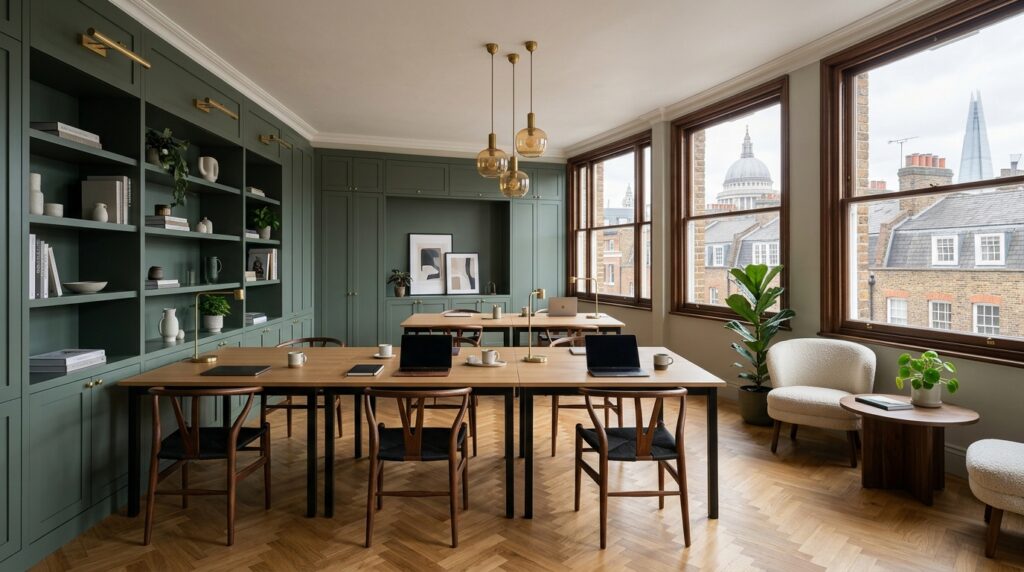
Office design photography is a discipline that sits at the intersection of architecture, interior design, and commercial brand communication. It is not simply the act of photographing an office. It is the specialist practice of capturing a designed workspace in a way that communicates the intention behind every design decision, the quality of every material choice, and the culture that the space was built to enable. For London businesses that have invested in a thoughtfully designed workplace, professional office design photography is what turns that investment into a visible and commercially active brand asset.
This post defines what office design photography actually involves, explains why it matters commercially for businesses and designers alike, and sets out what a professional commission produces that standard workspace photography does not.
What Office Design Photography Is and How It Differs from Standard Office Photography
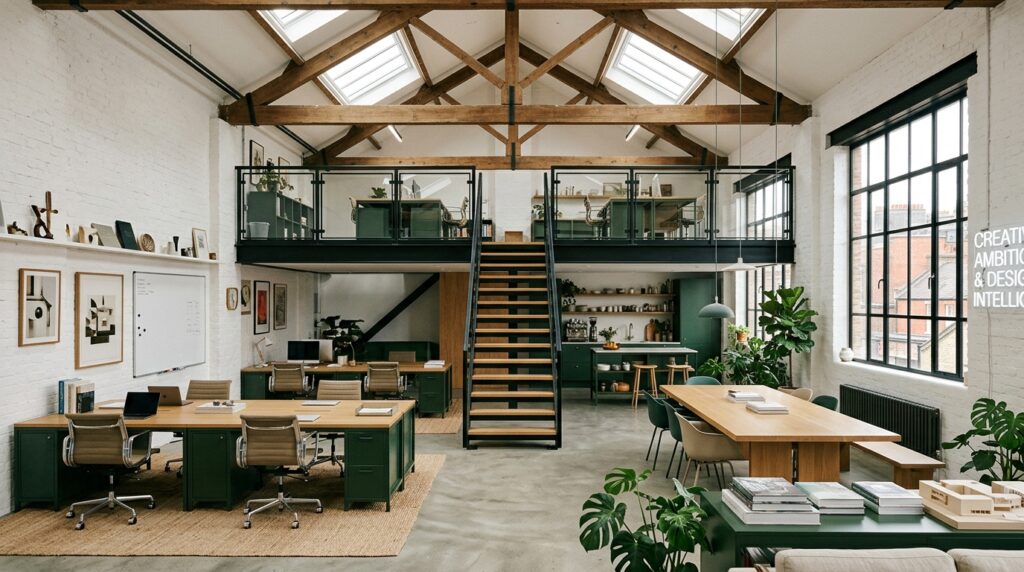
As CBRE’s UK workplace experience report1 confirms, the physical workspace is one of the most powerful expressions of a company’s culture, values, and investment in its people. The photography that documents a designed workspace needs to communicate all of that in a single visual encounter. Standard office photography documents what a workspace looks like. Office design photography communicates what it means.
The distinction matters because designed workspaces are not simply functional environments. They are the product of deliberate creative decisions made by designers, architects, and the businesses that commissioned them. Every material choice, every furniture specification, every lighting decision, and every spatial configuration reflects an intention. A specialist office interior photographer understands those intentions and captures the images that make them legible to anyone who views the photography, whether or not they ever visit the space in person.
The specific differences between standard office photography and specialist office design photography include:
- Compositional intent. Standard office photography shows the room. Office design photography shows the design decisions within the room. Every composition is chosen to communicate a specific quality, material, or spatial relationship rather than simply to show the space in full.
- Lighting approach. Standard office photography uses available light with minimal supplementary sources. Office design photography uses multi-source lighting to reveal material texture, spatial depth, and tonal richness that available light alone cannot produce.
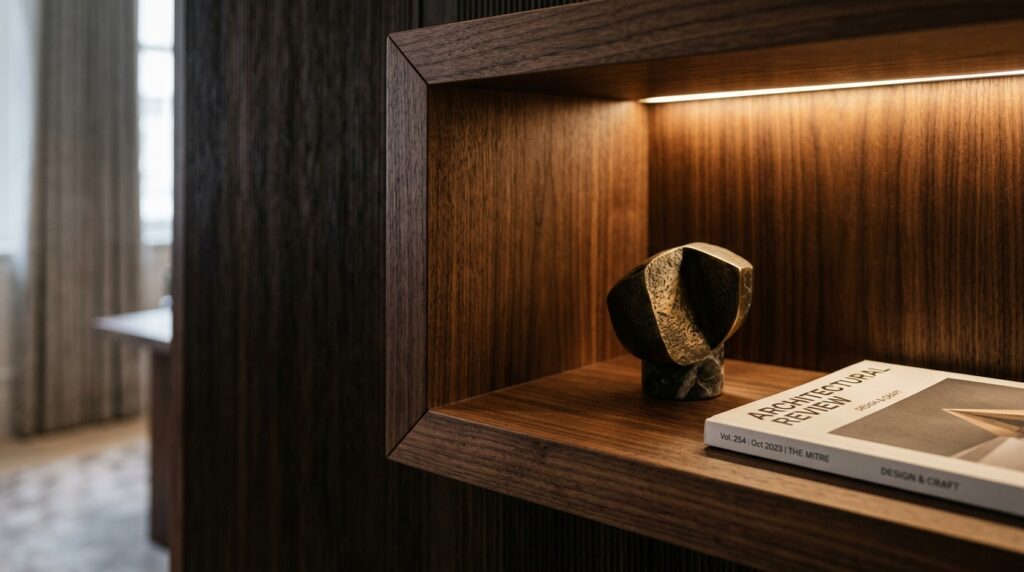
- Detail and scale balance. Office design photography produces images across multiple scales within a single shoot: wide architectural shots that communicate the overall spatial experience, mid-range shots that show the relationship between designed elements, and close detail shots that communicate material quality and craft.
- Preparation and styling. Standard office photography works with the space as found. Office design photography involves careful preparation of every area to be photographed, ensuring that each designed element is presented with the clarity and intentionality the design deserves.
Why Office Design Photography Matters for Interior Designers and Architects
As Deloitte’s workplace and talent experience study2 identifies, the physical workspace is the most direct expression of an employer’s investment in its people, and businesses that communicate that investment effectively through visual content attract and retain higher-quality talent. For interior designers and architects, this means that the photography produced from completed workspace projects is not simply documentation. It is the primary commercial evidence of the quality of their work.
A completed office design project that is not professionally photographed essentially does not exist in the market. It has been built, the client is using it, but without high quality office design photography it cannot be entered for awards, it cannot be submitted to design publications, it cannot be added to the practice portfolio in a way that communicates its quality, and it cannot be shown to prospective clients as evidence of what the practice produces. The photography is not a record of the project. It is the project’s public life.
Practice portfolio development
For interior designers and architects, the practice portfolio is the primary new business tool. Every project in that portfolio is an argument for why a prospective client should commission the firm. Workplace photography London specialists produce images that make each project’s strongest argument: communicating the design intent, the material quality, and the spatial experience with a clarity and precision that the design deserves.
Awards submissions
The BIID Interior Design Awards, the FX International Design Awards, RIBA awards, and sector-specific workplace design awards all require photography at a standard that communicates the quality of the designed environment. A specialist office design photography professional produces images formatted and composed to meet awards submission requirements, including the specific scales, orientations, and image qualities that each awards programme specifies.
Press and editorial coverage
Design publications including Dezeen, Wallpaper, Architectural Digest, and the interior design sections of national newspapers commission features on completed workspace projects based primarily on the quality of the available photography. A project with outstanding office photography London imagery gets covered. An equally strong project with mediocre photography does not. Professional photography is the prerequisite for press visibility, not a consequence of it.
Why Office Design Photography Matters for the Businesses That Commission Designed Workspaces
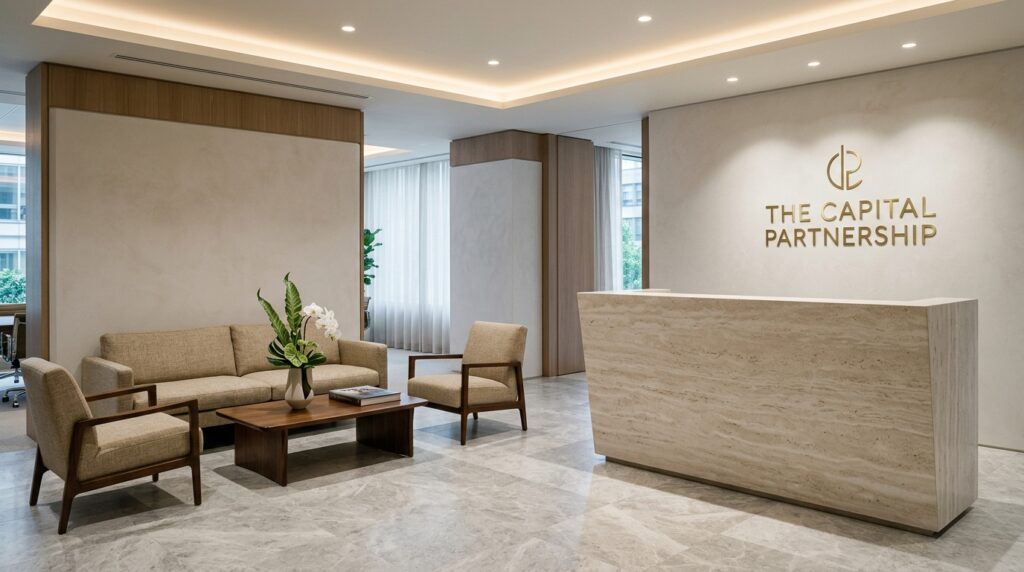
As Savills’ London office market and brand value research3 notes, businesses that invest in premium workspace design in London communicate a level of ambition, capability, and investment to clients and talent that cannot be communicated through other means. Professional office design photography is what makes that communication active rather than passive. It takes the quality of the physical environment and puts it in front of every prospective client and candidate who encounters the brand digitally, which in London’s current market is the vast majority of them.
Client-facing brand communication
A prospective client visiting a professional services firm’s website before a pitch meeting forms their first impression of the firm’s quality and ambition from the workspace photography before they read a word of the copy. Corporate photography London specialists produce images that communicate exactly what the business needs a prospective client to understand: that the firm operates at the level they require, invests in its environment, and takes the quality of its work seriously.
Talent attraction and employer brand
Candidates evaluating a job offer research the prospective employer’s workspace before deciding whether to accept. Professional office design photography on a careers page or LinkedIn profile communicates the physical working environment with a directness and quality that a verbal description cannot achieve. For London businesses competing for skilled professionals in technology, finance, law, and creative sectors, the workspace photography visible in digital channels is actively influencing candidate decisions.
Developer and investor materials
For property developers and commercial real estate investors in London, professional office space photography documents the quality of a workspace fit-out in a way that supports asset valuation, leasing negotiations, and investor presentations. A well-photographed office environment communicates investment value and design quality with a specificity that a written specification cannot replicate.
Internal communications and culture building
Businesses that have invested in a thoughtfully designed workspace use professional workplace photography London for internal communications, induction materials, and culture documentation. These images reinforce to existing employees that the business takes their working environment seriously, contributing to engagement and retention in ways that are commercially significant but rarely attributed to photography.
What a Professional Office Design Photography Shoot Produces
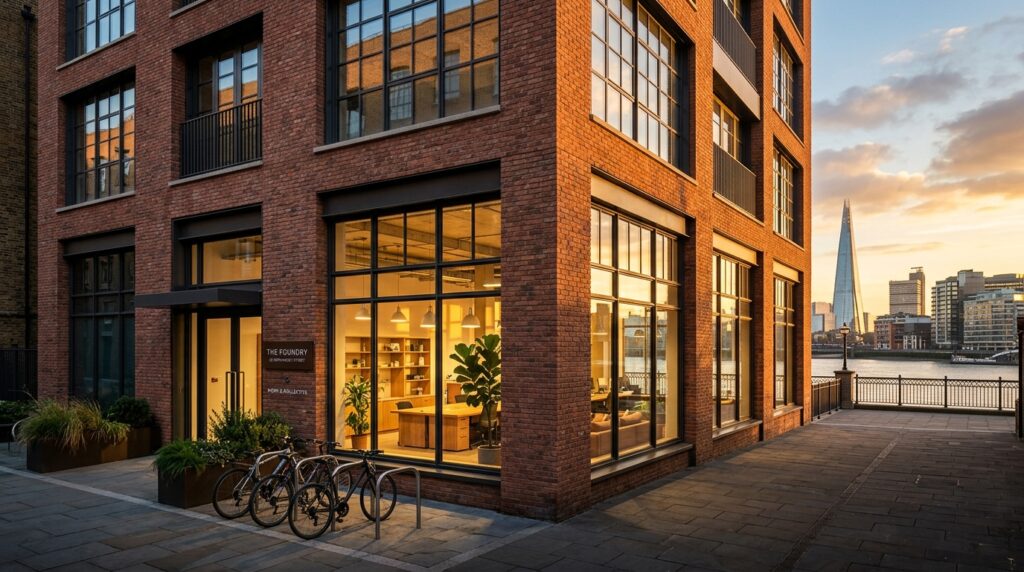
As Baymard Institute’s research on professional visual content and brand credibility4 demonstrates, the quality of imagery on a professional services or design firm’s digital presence is the primary visual credibility signal that prospective clients use to assess whether the firm operates at the level they require. A professional office design photography commission produces a library that serves that credibility signal consistently and across every channel the brand uses.
A properly planned and executed office design photography shoot produces:
A library structured by scale and purpose
Wide architectural shots communicate the overall spatial experience. Mid-range shots communicate the relationship between designed elements and the activity they enable. Close detail shots communicate material quality, craft, and the care in every design decision. A complete office design photography library covers all three scales, ensuring that images are available for every context in which the work needs to be presented.
Images formatted for every intended platform
A professional delivery includes high-resolution files for print and press, web-optimised versions for digital use, and pre-cropped formats for social media, LinkedIn, and any specific platform requirements agreed at briefing stage. A specialist office interior photographer plans for these format requirements during the shoot rather than adapting landscape images for portrait formats after delivery.
Consistent colour grading and tonal quality across the full set
Every image in a professional office design photography set should feel like it belongs to the same visual world. Consistent colour temperature, consistent exposure style, and consistent tonal range across the full library is what makes a portfolio or credentials presentation read as a coherent brand rather than a collection of separate projects.
Imagery that ages well
A well-produced set of corporate photography London images from a designed workspace serves the brand for years after the shoot. Design quality does not date quickly. Photography that communicates material quality and spatial intention with precision remains commercially effective long after trends in styling or post-production have shifted. Investing in the right specialist produces a library with a long commercial life.
Frequently Asked Questions
Who commissions office design photography?
The two primary commissioners of office design photography are the design and architecture firms who created the space, and the businesses that occupy it. Interior designers and architects commission photography to document completed projects for their portfolios, press submissions, and awards entries. Corporate occupiers commission photography to use across their brand communications, recruitment channels, and client-facing materials. In many cases, both parties commission from the same shoot, sharing the cost and each receiving the images they need. A specialist office photography London professional will discuss shared commission arrangements as part of the briefing process.
How is office design photography different from architectural photography?
Architectural photography focuses primarily on the building as a designed object: its structure, geometry, and relationship to its site. Office design photography focuses on the designed interior environment: its materials, furniture, lighting, spatial configuration, and the working culture it enables. In practice, the best workspace documentation integrates both approaches. A specialist workplace photography London professional covers both disciplines and understands when each approach serves the project most effectively.
Should people be included in office design photography?
As Nielsen Norman Group’s research on professional services visual content5 shows, combining environment photography with people photography produces significantly higher engagement on professional brand channels than either alone. For most office design photography commissions, the ideal library includes both empty architectural images that communicate the quality of the design and lifestyle images with models or staff that communicate the working culture the design enables. The balance between the two depends on the primary intended use of the images and should be agreed at briefing stage.
How long does an office design photography shoot take?
A thorough office design photography shoot for a mid-size London office fit-out covering all key spaces typically takes one full day. For larger multi-floor environments, extensive amenity spaces, or shoots that include both architectural and lifestyle elements, two days produces more comprehensive coverage and allows time for the different lighting setups that each area requires. Preparation time before the photographer arrives should always be allocated as a separate block, not absorbed into the shoot day itself.
What should we brief the photographer with before the shoot?
The most effective briefs for office design photography start with the intended use of the images rather than a room-by-room coverage list. Share the design intent and key design decisions with the photographer, provide brand guidelines and any visual references that communicate the aesthetic you are aiming for, confirm all intended output channels and formats, and identify the specific spaces and design elements that must be captured as priority shots. A specialist office interior photographer will use all of this context to make every creative decision on the day in service of the brief. Browse the workspace and office photography portfolio at interiorphotographer.photos to see the standard of work a thorough brief produces.
Commission Your Office Design Photography in London
A thoughtfully designed workspace deserves photography that communicates its quality with equal care and precision. Professional office design photography turns the investment made in a designed environment into a visible and commercially active brand asset, serving practice portfolios, award entries, press features, client acquisition, and talent attraction from a single well-planned shoot day.
Browse the full workspace and office photography portfolio, the architecture photography portfolio, and the advertising photography portfolio at interiorphotographer.photos, then get in touch via the contact page to discuss your brief. Joel Knight is a London-based office interior photographer working with interior designers, architects, corporate occupiers, and workplace design firms across London.
REFERENCES & CITATIONS
- CBRE (2023). UK Workplace Experience Report: Workspace as Brand and Culture Expression. cbre.com/insights. Cited in H2 Section 1. [Physical workspace as one of the most powerful expressions of company culture, values, and investment in people.]
- Deloitte (2023). Workplace and Talent Experience Study: Design Investment and Talent Communication. deloitte.com/workplace-study. Cited in H2 Section 2. [Businesses communicating workspace investment effectively through visual content attracting and retaining higher-quality talent.]
- Savills (2023). London Office Market and Brand Value Research: Workspace Design and Commercial Communication. savills.com/research. Cited in H2 Section 3. [Premium workspace design in London communicating ambition, capability, and investment to clients and talent in ways other channels cannot replicate.]
- Baymard Institute (2023). Professional Visual Content and Brand Credibility: Design Firm and Corporate Website Imagery. baymard.com/research. Cited in H2 Section 4. [Imagery quality as primary visual credibility signal for prospective clients assessing professional services and design firms online.]
- Nielsen Norman Group (2022). Professional Services Visual Content: Environment and People Photography Engagement. nngroup.com. Cited in H2 Section 5 FAQs. [Combining environment photography with people photography producing significantly higher engagement on professional brand channels than either in isolation.]