
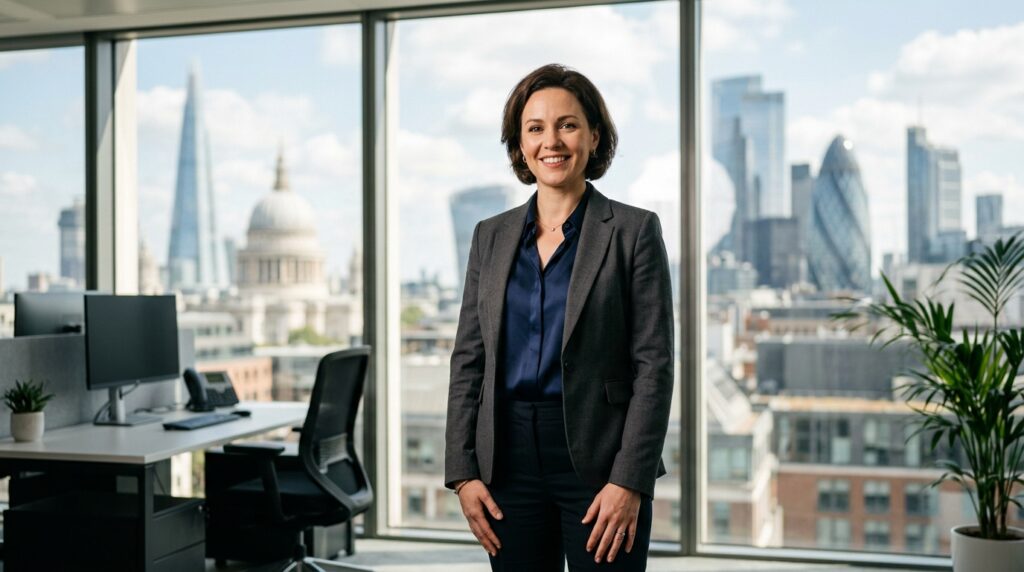
A commercial portrait photographer does something a standard headshot session cannot: they make a deliberate visual argument about who you are and what your business stands for. Before a prospective client reads a word of your website copy, before they open your pitch deck or review your proposal, they have already formed an opinion based on the photograph they found of you. That first visual impression happens in under two seconds. In London, where most senior professionals operate across competitive markets with multiple credible alternatives, that two-second window is where commercial portrait photography earns its return.
This guide is written for marketing directors, HR teams, founders, and brand managers commissioning professional portrait photography for business use. It covers what separates a working commercial portrait photographer from a standard headshot service, how to plan and brief a shoot effectively, what the work delivers commercially, and what to expect when commissioning in London.
Why Commercial Portrait Photography Is a Business Investment, Not a Cost
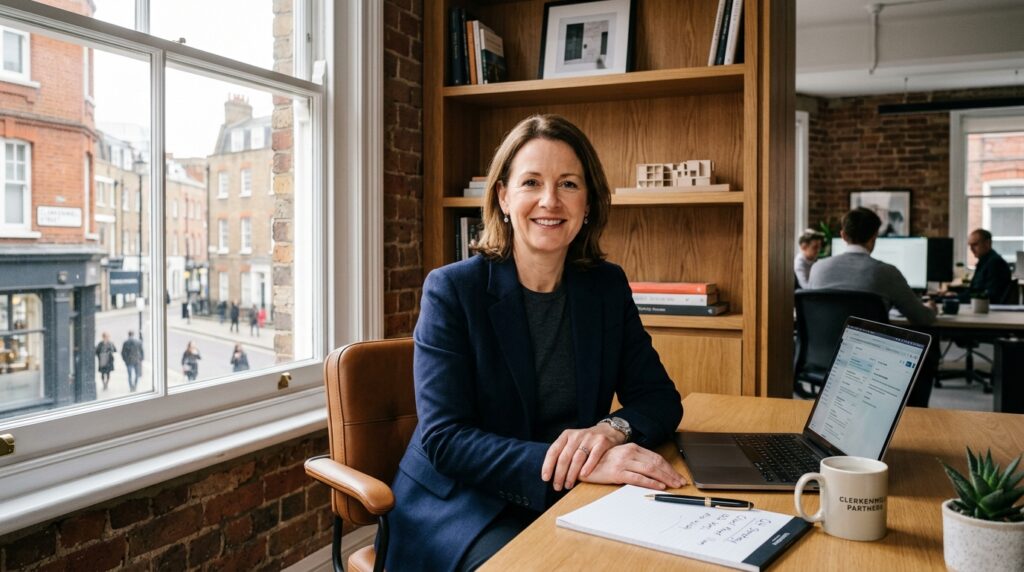
Professional photography generates measurable outcomes across the channels where businesses need to perform. A 2018 study cited by LinkedIn Business found that LinkedIn profiles with professional headshots received up to 21 times more profile views and nine times more connection requests than profiles with no photograph or an unprofessional one. [1] For a commercial context, the implications go further than personal profile visibility.
Professional portraits appear across four high-stakes business touchpoints:
LinkedIn profiles and company pages: where prospective clients, partners, and candidates form their first impression of your leadership team and brand culture.
Website team and about pages: where the visual quality of portraits directly signals the quality of the business. A mismatch between premium service positioning and low-quality photography creates distrust before a conversation has started.
Press and editorial coverage: where a strong portrait photograph determines whether a journalist uses your image or finds an alternative, and whether the coverage conveys the authority your business is trying to project.
Conference materials, speaker profiles, and event listings: where portrait quality signals credibility to audiences evaluating whether to attend a talk or engage with a speaker.
Each of these placements is a commercial asset with a lifespan of several years. A single well-produced portrait session in London, shot correctly and covering multiple uses, delivers a return across every channel simultaneously.
What a Commercial Portrait Photographer Does That a Headshot Photographer Does Not
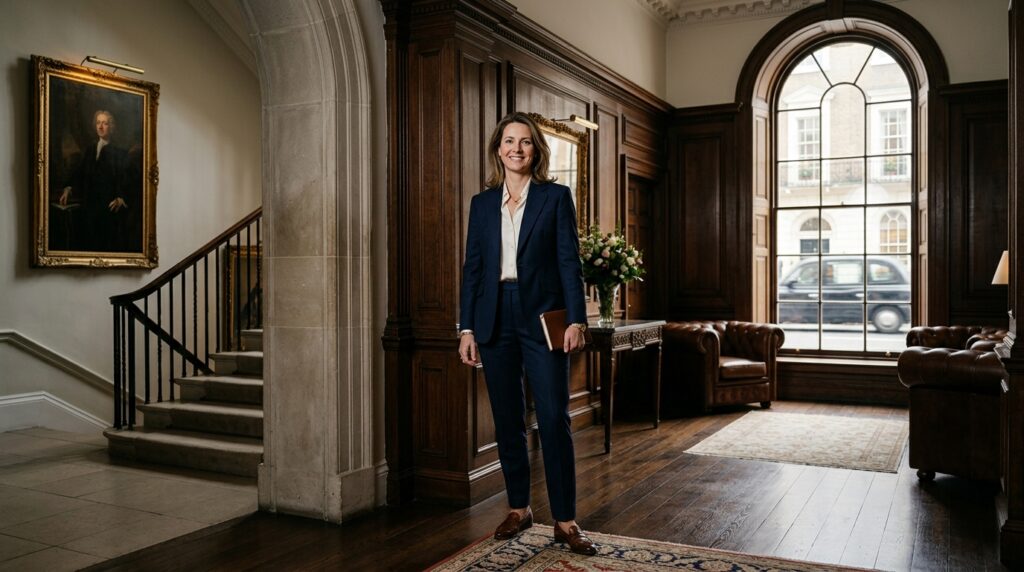
The distinction between commercial portrait photography and a standard headshot session is not about camera equipment. It is about intent, process, and what the image is required to communicate.
Communicating a specific brief
A commercial portrait photographer begins with a brief, not a backdrop. They ask what the image needs to convey, where it will be placed, who the audience is, and what action the image should prompt. A portrait for a financial services firm competing on reliability and discretion requires a fundamentally different approach to a portrait for a creative agency positioning on innovation. The locations, lighting, posing direction, wardrobe guidance, and post-processing all follow from that brief, not from a standardised studio formula.
Using location as a communication tool
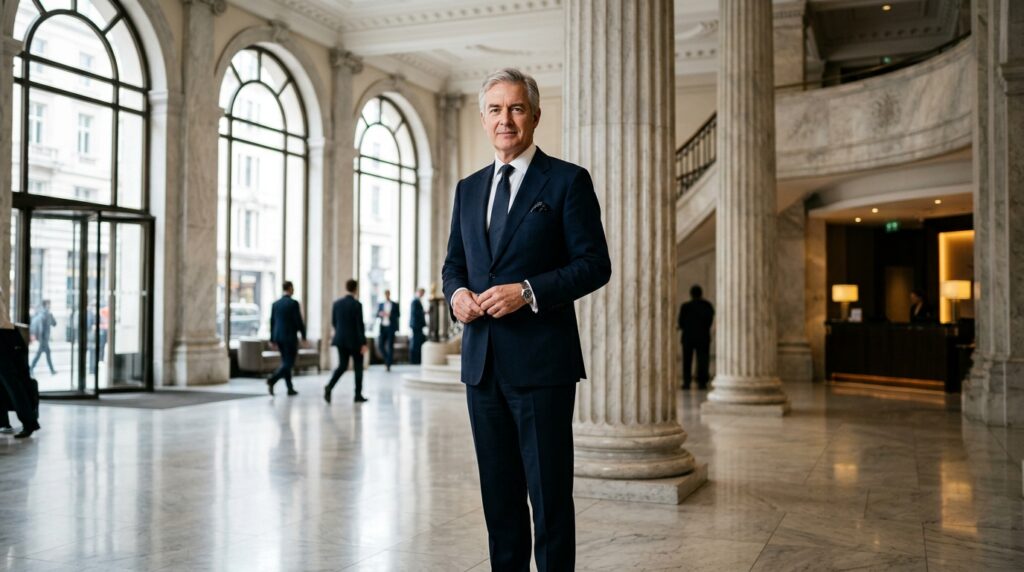
Research by the Nielsen Norman Group on visual credibility assessment found that authentic, contextually relevant photographs generate significantly higher trust responses than generic or staged studio alternatives. [2] London offers an extraordinary range of locations that carry immediate professional signals: Clerkenwell offices with original industrial architecture, Mayfair townhouses and private members clubs, the City with its glass-and-steel skyline, Fitzrovia creative studios, South Bank arts institutions, and Shoreditch workspace environments. A working commercial portrait photographer in London uses location as a deliberate element of the image, not as a backdrop chosen for convenience.
Directing authentic expression, not performance
The most common problem with business portraits is that the subjects look uncomfortable. This is not a consequence of the person. It is a consequence of poor direction. A commercial portrait photographer provides specific, practical guidance throughout the session: how to position the body to avoid tension, where to place the eyeline to create connection without intensity, what to think about to produce a genuinely relaxed expression rather than a held smile. The result is a photograph that looks like the person at their best rather than a version of the person pretending to be photographed.
Producing consistent results across a team
For companies photographing leadership teams, the consistency of light, colour treatment, and compositional approach across multiple portraits matters as much as the quality of any individual image. Team pages with inconsistent photography signal disorganisation and undermine the premium positioning most London businesses work to project. A commercial portrait session plans for this from the start: consistent lighting set-up, consistent framing, consistent post-processing, and a brief for each subject that produces individually strong portraits that work as a coherent collection.
How to Plan and Brief a Commercial Portrait Shoot in London
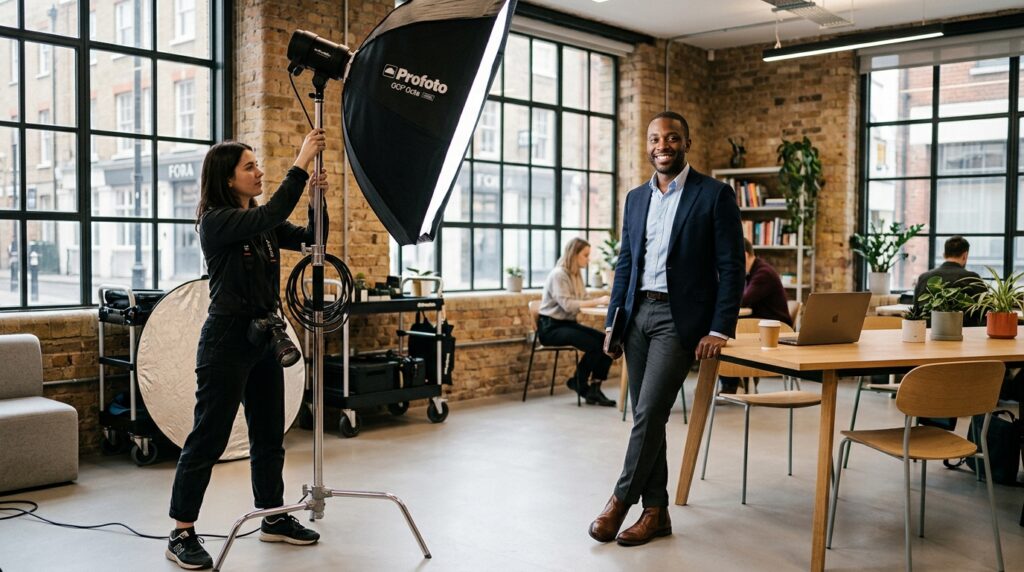
Define the intended use before anything else
Portrait photography for LinkedIn and team pages requires different sizing, cropping, and compositional decisions to portrait photography intended for press use or advertising. Before briefing a photographer, define the primary use case, the secondary use cases, the approximate number of subjects, the budget range, and the deadline. A clear brief at the outset prevents reshoots and ensures the delivered images work across every intended channel.
Choose the location based on the audience, not personal preference
A Deloitte CMO Survey on visual brand consistency found that companies maintaining consistent visual presentation across channels, including portrait photography, reported significantly stronger brand equity scores than those with inconsistent visual assets. [3] The location choice directly affects the brand signals the portrait sends. A law firm shooting in a glass-fronted City office reinforces one set of values. The same firm shooting on the South Bank with the Thames visible reinforces a different set. The right choice depends entirely on the audience being addressed and the positioning being projected.
Wardrobe and grooming guidance
The single most common cause of portrait reshoots in commercial contexts is wardrobe. Provide subjects with specific guidance at least one week before the shoot: avoid pure white close to the face unless the photographer has confirmed it works with the planned lighting, avoid busy patterns that distract from the face in smaller formats, bring two outfit options to allow the photographer to make a final recommendation on the day, and ensure grooming is completed immediately before the session rather than the day before.
Plan team shoots as a production, not a series of individual sessions
Photographing a leadership team of eight people in a single day is a production-level exercise. Each subject needs approximately 20 to 30 minutes for a thorough individual session. Allow additional time for wardrobe adjustments, lighting modifications between subjects, and the inevitable schedule slippage that comes with coordinating multiple people. A half-day block for teams of up to six, or a full day for larger teams, produces better results than attempting to compress the schedule.
The Commercial Return on Professional Portrait Photography
New business enquiry quality
Research by the Baymard Institute on trust signals in professional services found that portrait photograph quality was among the most significant factors influencing conversion rates on about and team pages, with higher-quality photography correlating with lower bounce rates and higher contact form submission rates. [4] In practical terms, this means a senior partner at a professional services firm in London with a strong environmental portrait on their profile page generates more qualified enquiries from the same volume of traffic than the same profile with a poor-quality photograph.
LinkedIn performance
Beyond profile views and connection requests, professional portrait photography affects the performance of LinkedIn content. Posts that include the author’s portrait in the article preview or alongside the post generate higher engagement rates than those without. For businesses running thought leadership content as part of their marketing strategy, the portrait quality directly affects the commercial return on that content investment.
Press and editorial visibility
Journalists and editors working to commission portrait illustrations for features, profiles, and opinion pieces will use the best available image of a subject. For London business leaders seeking press coverage, supplying a high-quality portrait photograph to a press contact guarantees editorial control over how the subject is represented. Without a strong image on file, coverage may use an inferior photograph taken without professional direction, or decline to use an image at all.
Recruitment and employer brand
The quality of visual assets on careers pages and in job postings directly influences the calibre of candidate applications. A Kantar BrandZ analysis of employer brand equity found that visual presentation quality, including portrait and team photography, was a meaningful factor in candidate perception of company prestige and the likelihood of applying for senior roles. [5] For London businesses competing for senior talent, this is a tangible commercial argument for investing in portrait photography.
Frequently Asked Questions
What is the difference between a commercial portrait photographer and a headshot photographer?
A headshot photographer typically works to a standardised formula: consistent background, standard lighting set-up, and a fixed session duration that moves quickly through multiple subjects. The output is a technically acceptable photograph that serves the basic function of showing what someone looks like. A commercial portrait photographer works from a brief that defines what the image needs to communicate, uses location and environment as deliberate visual tools, provides professional direction throughout the session, and produces work that functions as a commercial asset across multiple channels. The two services are not interchangeable for businesses where visual positioning is part of the brand strategy.
How long does a commercial portrait session in London typically take?
An individual commercial portrait session for a single subject typically runs between one and two hours, including location scouting on arrival, lighting set-up, the portrait session itself, and review of selects. Team sessions of three to eight people are typically planned as half-day productions of four to five hours. Larger team sessions of nine or more subjects require a full day. The timeframe depends on the number of distinct looks required, the number of locations used within the shoot, and the complexity of the brief.
Should the shoot take place in our London office or on location?
This is a brief question, not a preference question. The right answer depends on what your office environment communicates and whether that matches the positioning you want the portraits to project. A well-designed Clerkenwell or Shoreditch office with architectural character often produces stronger portraits than a generic corporate environment, because the location adds a layer of contextual information about the culture of the business. A purpose-built studio offers full lighting control but fewer environmental signals. The decision should follow from the brief rather than default to whichever option is most logistically convenient.
How many final images should a commercial portrait session deliver?
For a single-subject individual session, a well-planned shoot typically delivers eight to fifteen final selected and retouched images covering different expressions, slight compositional variations, and any planned wardrobe changes. For team sessions, three to five selects per person is a standard deliverable. The number of finals is less important than the quality and usability of the images delivered: images should be supplied at full resolution for print use and optimised for web and social media use as separate files.
What should we look for when choosing a commercial portrait photographer in London?
Review the portfolio for evidence of environmental portrait work shot in London locations rather than studio work only. Look for consistency of quality across a team or multi-subject portfolio, which is a more meaningful indicator of technical and directorial competence than a selection of individually strong images. Review the range of business sectors represented: a commercial portrait photographer with experience across financial services, creative industries, and professional services has developed the flexibility to read different clients and brief requirements accurately. Finally, confirm that the quoted work includes retouching, file licensing for multiple uses, and a minimum delivery timeframe before booking.
Commission a Commercial Portrait Photographer in London
The businesses that perform best visually across LinkedIn, press, and digital channels are not necessarily the ones with the largest marketing budgets. They are the ones that treat portrait photography as a strategic asset rather than an administrative task to be completed at the lowest available cost. A strong portrait photograph works across every channel simultaneously for years. It shapes how prospective clients, press contacts, and senior candidates perceive your business before any direct conversation takes place.
The most effective approach is to commission portrait photography that is briefed specifically for your intended use, shot in a London environment that reinforces your brand positioning, and delivered at a quality level that holds up across every format from a thumbnail profile image to a full-page editorial spread.
To view portrait work produced for London businesses across financial services, architecture, creative agencies, and professional services, visit the portraits portfolio. For advertising and campaign portrait work, the advertising portfolio covers editorial and campaign commissions. To discuss a commercial portrait brief or request availability, get in touch directly.
References
All external sources cited in this article are established industry research sources.
- LinkedIn Business. Why Professional Headshots Matter for LinkedIn Profiles. LinkedIn Marketing Solutions Blog, 2018
- Nielsen Norman Group. Photos as Web Content: When Authentic Images Help and When They Hurt. Nielsen Norman Group Research, 2018
- Deloitte. The CMO Survey: Visual Brand Consistency and Brand Equity. Deloitte CMO Survey, 2023
- Baymard Institute. Trust Signals in Professional Services: Portrait Photography and Conversion. Baymard Institute Research, 2022
- Kantar. BrandZ: Employer Brand Equity and Visual Presentation Quality. Kantar BrandZ Report, 2023