
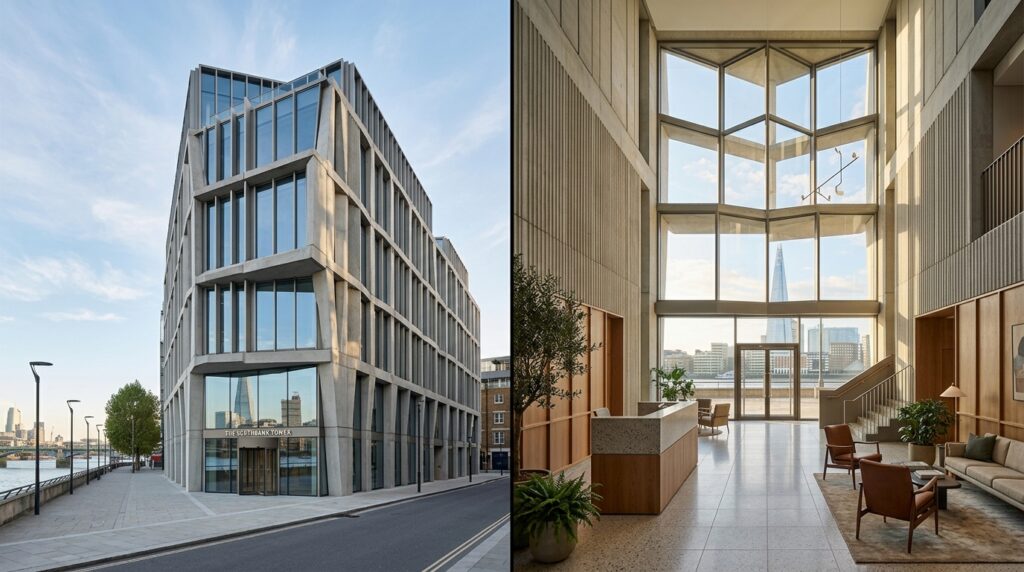
The distinction between architecture photography and interior photography is one that matters commercially more than most clients realise before they commission a shoot. Both disciplines document the built environment. Both require specialist equipment, technical skill, and a specific creative approach. But they serve different purposes, communicate different things, and are used in different contexts by different audiences. Commissioning the wrong type of photography for your project does not simply produce suboptimal images. It produces imagery that fails to communicate the specific qualities your project needs to demonstrate, to the specific audience who needs to see them.
This post explains clearly what separates architecture photography services from interior photography, when each discipline is the right choice, when a project requires both, and how to brief a specialist effectively for either.
What Architecture Photography Services Actually Photograph
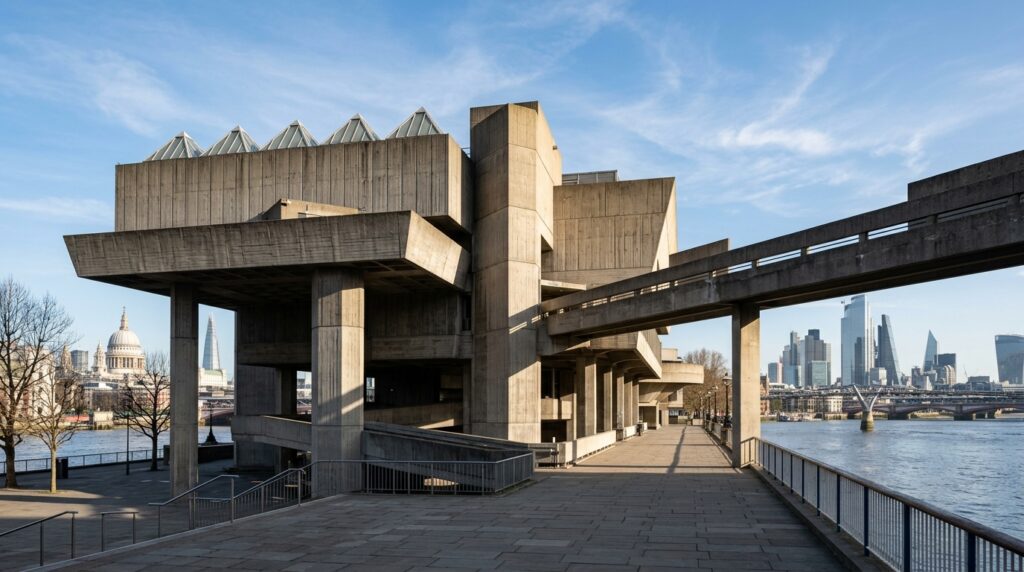
As RIBA’s guidance on architectural portfolio development1 consistently demonstrates, the primary purpose of architectural photography is to communicate the design intent of a building as a physical object in its environment. Architecture photography is concerned with the building itself: its structure, its geometry, its materials, its relationship to the site, its scale relative to the surrounding urban or natural landscape, and the design decisions made at the level of the facade, the massing, and the structural system.
Professional architecture photography services produce images that address these concerns specifically. An architectural photographer approaches a building as a three-dimensional design object and chooses viewpoints, focal lengths, times of day, and lighting conditions that reveal the building’s design logic with maximum clarity. The camera is positioned to make the structure legible, to honour the geometry, and to communicate the relationship between the building and its context in London’s urban landscape.
The subjects that fall clearly within architectural photography include:
- Building exteriors and facades. The primary subject of architectural photography. Every viewpoint, every lens choice, and every lighting condition is selected to reveal the facade’s design logic, material quality, and relationship to the surrounding built environment.
- Structural and engineering details. The jointing of a curtain wall system, the precision of a structural connection, the geometry of a cantilevered element. These details communicate the technical ambition of the design at a scale that wide shots cannot.
- Exterior public spaces and landscape. The relationship between a building and its immediate public realm, including plazas, courtyards, gardens, and streetscapes, is part of the architectural proposition and is documented as part of a complete architectural photography commission.
- Building in urban and landscape context. London’s built environment is one of the most photographically complex in the world. Situating a building within its London context, whether that is the City skyline, the South Bank riverfront, or a residential street in Hackney, is part of what architectural photography London services communicate.
What Interior Photography Photographs and How It Differs
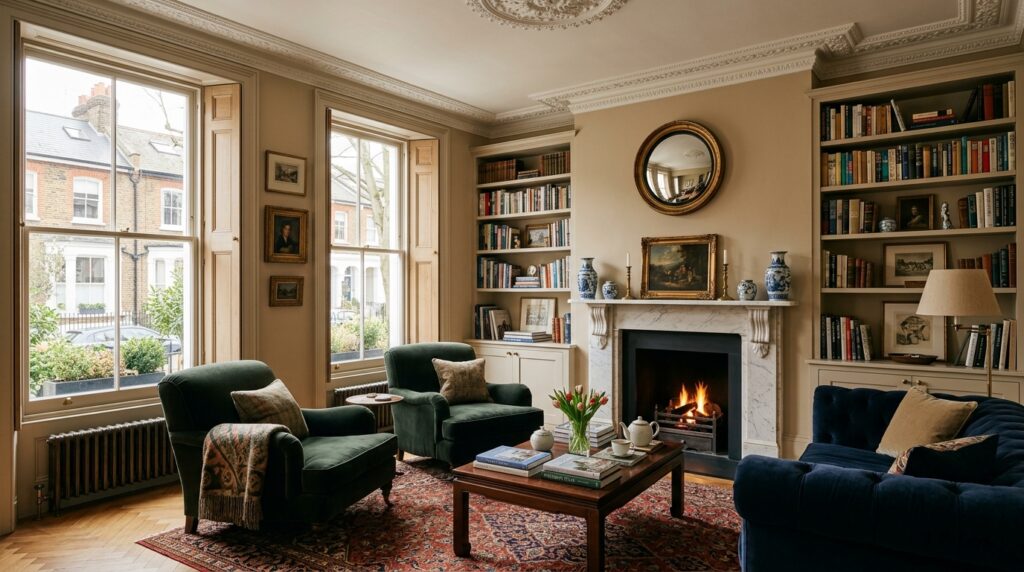
As Savills’ prime London property and design research2 identifies, the photography used to communicate the quality of a designed interior environment to buyers, tenants, and clients must capture the experiential qualities of the space rather than its structural properties. Interior photography is concerned with what it feels like to be inside a space: the quality of the light, the character of the materials, the atmosphere created by the design, and the relationship between the designed environment and the human activity it enables.
Interior photography approaches a space from the inside out rather than the outside in. The interior photography London specialist positions the camera to reveal the spatial experience, to communicate the material quality at the scale of human encounter, and to capture the atmosphere that the interior design has been crafted to produce. The viewpoints chosen are those from which a person would actually experience the space, not the external viewpoints from which the building’s structural logic is most legible.
The subjects that fall clearly within interior photography include:
- Residential living spaces. Rooms, kitchens, bathrooms, and circulation spaces photographed to communicate the lifestyle quality and design character of a home.
- Hospitality interiors. Hotel bedrooms, lobbies, restaurants, and bars photographed to communicate atmosphere, comfort, and brand identity to guests who have not yet visited.
- Commercial and workplace interiors. Office environments, co-working spaces, and corporate reception areas photographed to communicate culture, investment, and working quality to clients and talent.
- Retail environments. Store interiors photographed to communicate brand positioning, product desirability, and the experience of visiting in person to potential customers.
Architecture vs Interior Photography: A Side-by-Side Comparison
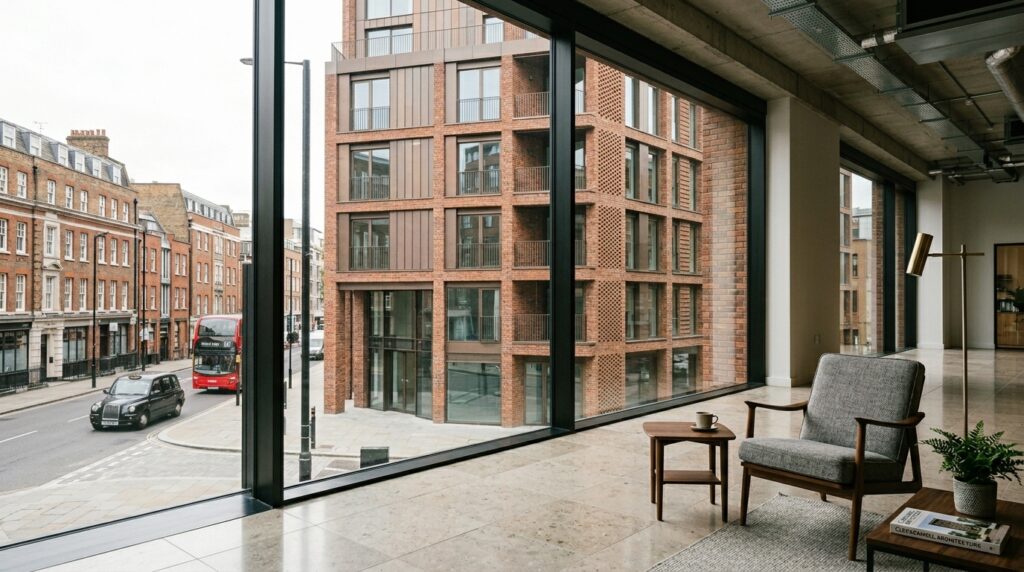
As Knight Frank’s prime property marketing research3 notes, the most effective documentation of premium London architecture and residential development integrates both architectural and interior approaches, because buyers and investors need to understand the quality of the building as a designed object and the quality of the environment within it. The two disciplines address different questions and require different answers.
Factor | Architecture Photography Services | Interior Photography |
Primary subject | The building as designed object | The designed environment within the building |
Camera position | Exterior viewpoints revealing structure and geometry | Interior viewpoints revealing spatial experience |
Key technical requirement | Tilt-shift lenses, perspective control, exterior light management | Multi-source interior lighting, exposure balance, atmosphere capture |
Primary audience | Architects, developers, planners, press, award bodies | Buyers, tenants, guests, clients, talent, lifestyle media |
Typical use | Practice portfolios, awards, planning, architectural press | Property listings, hotel marketing, brand websites, social media |
What it communicates | Design intent, structural quality, urban context | Atmosphere, material quality, experiential character |
Time of day sensitivity | Very high. Light direction relative to facade is critical | High. Natural light quality through windows shapes atmosphere |
Typical shoot duration | Half day to full day per building | Half day to two days depending on size and complexity |
When Your Project Needs Both Architecture Photography Services and Interior Photography
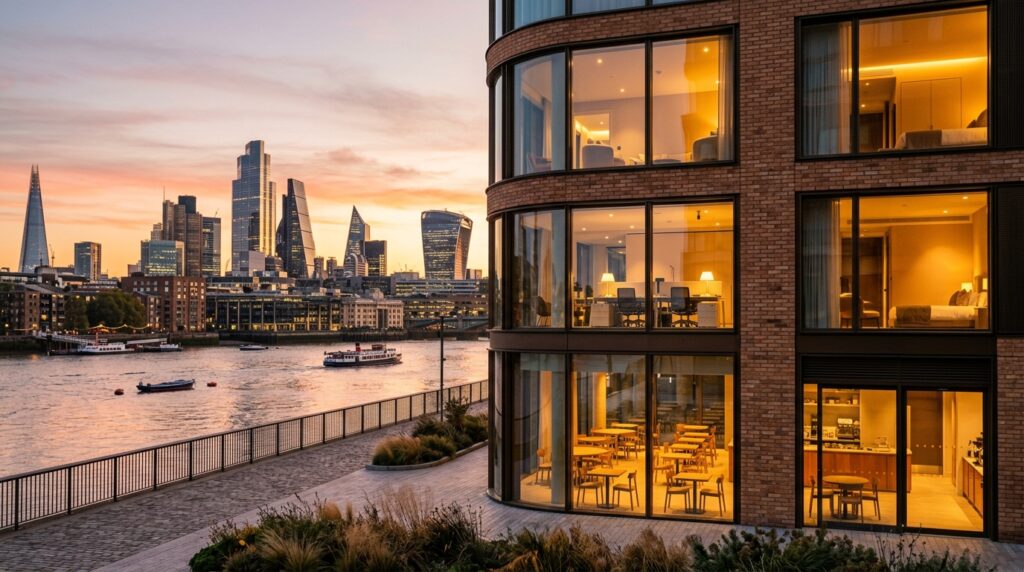
As Baymard Institute’s research on multi-channel visual content4 demonstrates, visual content libraries that address multiple audience needs from a single production investment consistently outperform those built around a single discipline or channel. For most substantial London architecture and design projects, the strongest commission integrates both architecture photography services and interior photography within a single coordinated shoot, producing a library that serves every audience and every channel the project requires.
The project types that most consistently benefit from an integrated approach include:
Residential developments and new build schemes
A developer marketing a new residential scheme in London needs architectural photography London that communicates the building’s design quality, its relationship to the neighbourhood, and the quality of its construction for buyers, investors, and planning stakeholders. The same scheme also needs interior photography of show homes and apartment types that communicates the lifestyle quality, the spatial generosity, and the material finish to potential purchasers. Neither discipline alone produces a complete marketing library for a residential scheme.
Hospitality and hotel projects
A London hotel requires architectural photography that captures the building in its urban context for press and editorial use, and interior photography that captures the guest experience across rooms, lobbies, dining, and amenity spaces for OTA listings, the hotel website, and social media. The two disciplines serve different platforms and different booking decision moments. Both are essential components of a comprehensive hospitality photography commission.
Commercial and mixed use developments
Commercial office buildings and mixed-use schemes in London require professional architectural photographer work that communicates the building’s design quality for developer and investor materials, architectural press, and awards submissions, alongside interior photography of the workspace environments that communicates the occupier experience for leasing and corporate marketing. Integrating both within a single commission produces visual consistency across all materials and maximises the return on the production investment.
Architect and interior designer portfolios
For practices whose work spans both architectural and interior design, a single project that demonstrates both disciplines at a professional standard is one of the most commercially effective portfolio entries available. An integrated commission that covers both the building and its interior environment as a coherent visual narrative tells the complete design story and demonstrates the full breadth of the practice’s capability in a single image set.
Frequently Asked Questions
Can one photographer cover both architecture and interior photography?
Yes, and there are significant advantages to commissioning a single specialist for both. Visual consistency across architectural and interior images is one of the most commercially valuable qualities in a photography library. When both disciplines are covered by the same photographer, the images share a consistent aesthetic, a consistent tonal approach, and a consistent visual language that makes the full library read as a coherent body of work rather than two separate commissions assembled together. Joel Knight covers both architecture photography and interior photography as part of integrated commissions across residential, commercial, and hospitality project types.
Which should be commissioned first for a new building project?
Both should ideally be planned together and shot in a coordinated sequence. Exterior architectural photography is often most effective in specific light conditions that depend on the building’s orientation and the time of year, so shoot timing should be planned around the building’s optimal exterior light window. Interior photography can be timed around practical considerations, including completion of the fit-out, styling and preparation, and the availability of key spaces. A specialist offering architecture photography services will advise on the optimal sequence and timing for your specific project at the briefing stage.
Does interior photography require tilt-shift lenses like architectural photography?
Yes, in many interior contexts. Tilt-shift lenses correct converging verticals not just in exterior architectural photography but in any interior context where the camera needs to be positioned significantly below the ceiling height to capture a room. In tall reception areas, double-height living spaces, and atrium environments, a tilt-shift lens is as important indoors as it is outside. The technical requirements of professional architecture photography services and interior photography overlap more than the two disciplines are often assumed to. A specialist who covers both understands when each technical approach is required.
How do I know which type of photography my project primarily needs?
The clearest way to answer this question is to identify the primary audience for the images and what you need them to think or feel after viewing them. As Nielsen Norman Group’s research on visual content and audience communication5, imagery that is produced with a specific audience and a specific communication goal in mind consistently outperforms imagery produced without that clarity. If your primary audience is other architects, award bodies, or the architectural press, your project primarily needs architecture photography services. If your primary audience is buyers, tenants, guests, or clients who will experience the interior, your project primarily needs interior photography. If your audience includes both, the answer is both.
What are the most important questions to ask before commissioning either type of photography?
Before commissioning architecture photography services or interior photography for a London project, establish: who the primary audience is and what you need them to understand from the images, which channels the images will appear on and what format requirements each channel has, what the hero images for each intended use need to show, and whether the project requires both architectural and interior coverage or one primarily. A specialist photographer will use the answers to these questions to build a shoot plan that produces images calibrated for every required use from a single production investment.
Commission Your Architecture or Interior Photography Project in London
Understanding the distinction between architecture photography services and interior photography is the first step towards commissioning the right work for your London project. The second step is working with a specialist who covers both disciplines with equal confidence, producing a library that serves every audience your project needs to reach.
Browse the full architecture photography portfolio, the residential photography portfolio, the workspace photography portfolio, and the hotel photography portfolio at interiorphotographer.photos, then get in touch via the contact page to discuss your project. Joel Knight is a London-based professional architectural photographer working across architecture, interior, residential, hospitality, and commercial photography for architects, developers, designers, and construction firms throughout London and the UK.
REFERENCES
- RIBA (2023). Architect Portfolio Guidance: Photography Standards and Project Documentation. architecture.com. Cited in H2 Section 1. [Primary purpose of architectural photography is communicating design intent of a building as a physical object in its environment.]
- Savills (2023). Prime London Property and Design Research: Interior Photography and Experiential Communication. savills.com/research. Cited in H2 Section 2. [Photography communicating quality of designed interior environment must capture experiential qualities rather than structural properties.]
- Knight Frank (2023). Prime Property Marketing: Integrated Architecture and Interior Photography for London Developments. knightfrank.com/research. Cited in H2 Section 3. [Most effective documentation of premium London architecture integrates both architectural and interior approaches for different buyer and investor audiences.]
- Baymard Institute (2023). Multi-Channel Visual Content: Integrated Production Investment and Audience Reach. baymard.com/research. Cited in H2 Section 4. [Visual content libraries addressing multiple audience needs from a single production investment consistently outperforming single-discipline commissions.]
- Nielsen Norman Group (2022). Visual Content and Audience Communication: Goal-Oriented Photography Production. nngroup.com. Cited in H2 Section 5 FAQs. [Imagery produced with a specific audience and communication goal in mind consistently outperforming imagery produced without that clarity.]