
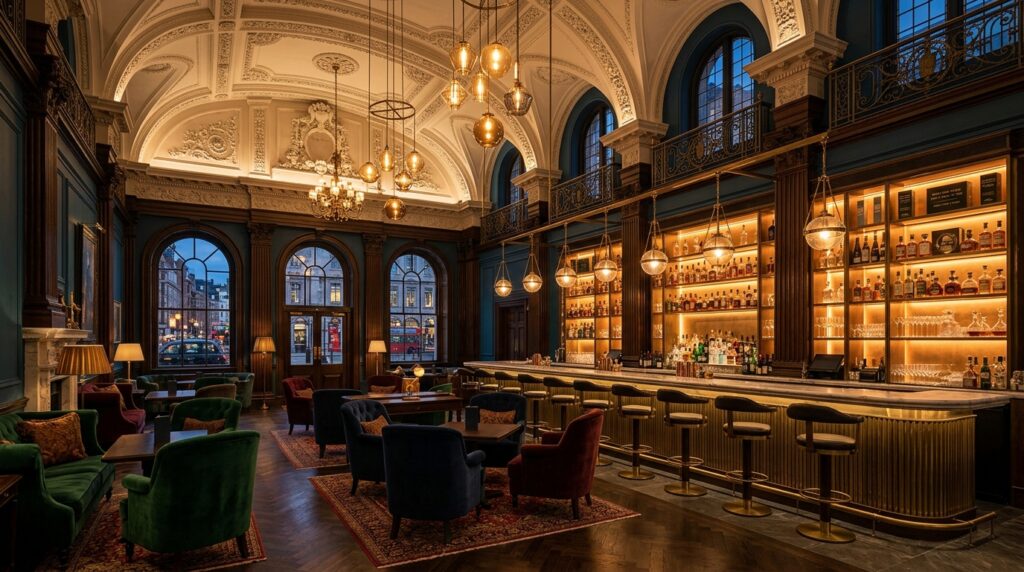
Why Every Hospitality Brand Needs a Professional Hospitality Photographer
The hospitality industry runs on the gap between expectation and experience. When those two things align, guests become loyal customers, leave strong reviews, and tell other people. When they diverge — when a hotel lobby that looked grand in the images turns out to feel ordinary in person, or when a restaurant that photographed warmly turns out to be bright and utilitarian — the result is a damaged review score, a guest who does not return, and a booking revenue problem that compounds over time. The work of a professional hospitality photographer is to close that gap from the right direction: by capturing the genuine quality of your venue with the skill, equipment, and creative approach that does it justice.
In London’s competitive hospitality market, where guests have access to hundreds of comparable options and make booking decisions in seconds based on what they see, commercial hospitality photography is not a marketing preference. It is a business-critical function — as important to your revenue as your pricing strategy, your review management, or your reservations system.
What a Hospitality Photographer Actually Does for Your Brand
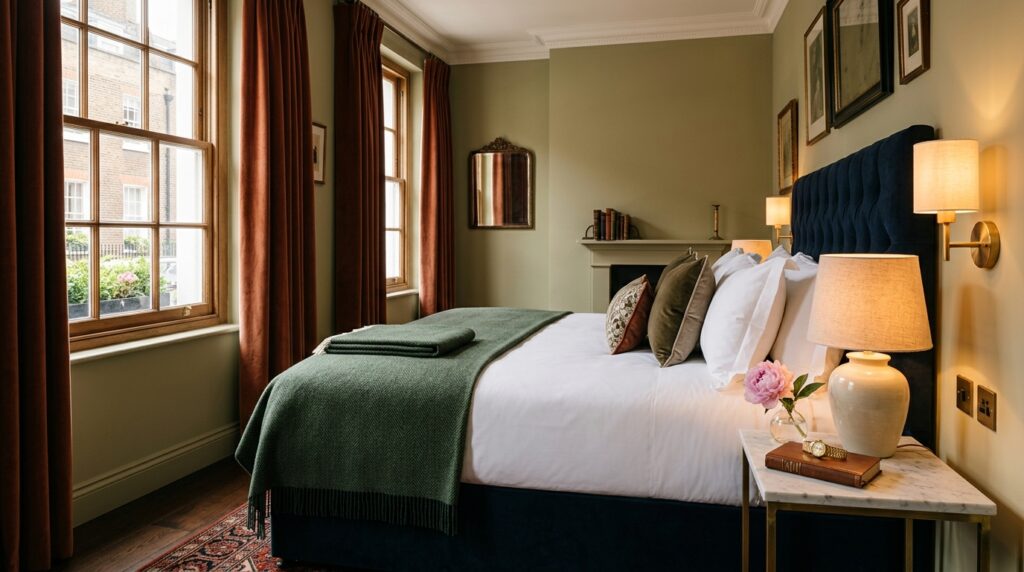
The role of a hospitality photographer extends well beyond arriving at a venue and taking photographs. Specialist hospitality photography London involves a structured production process: pre-shoot planning to understand the brand and the guest, technical setup to manage the specific lighting challenges of each space, direction of any people or lifestyle elements, and post-production that delivers imagery calibrated for every platform the brand uses.
The deliverables from a professional hospitality shoot serve multiple functions simultaneously:
- OTA listings (Booking.com, Expedia, Hotels.com). The primary driver of first-discovery traffic for most hotels. Higher-quality images produce higher click-through rates and lower cost-per-booking across all major platforms.
- Brand website and direct booking engine. The most valuable booking channel — zero commission. Images on a brand website need to work harder than OTA images because they are competing for attention without the algorithm support of a major platform.
- Social media and content marketing. Instagram, Pinterest, and LinkedIn all reward visual quality. A single exceptional image from a professional hospitality shoot will consistently outperform a week’s worth of phone content in reach and engagement.
- PR and press. Travel editors, food writers, and lifestyle publications commissioning features on London venues require images at a specific standard. Without them, your property is invisible to press — regardless of the quality of the experience it offers.
- Trade marketing and partnerships. Corporate travel buyers, event organisers, and wedding planners all make venue decisions based on the visual standard of a property’s imagery. Poor photography costs enquiries in this segment before a conversation even starts.
The Commercial Consequence of Underinvesting in Hospitality Photography
Deloitte’s annual hospitality consumer report identifies visual content quality as a top-five factor in hotel and restaurant booking decisions among consumers under 45 — the most valuable demographic in terms of booking frequency and average spend.1 For London’s hospitality brands competing at the premium end of the market, this is not a marginal factor. It is a primary commercial lever.
The revenue consequences of poor hospitality photography are measurable across several channels:
Lower OTA conversion and higher commission dependency
Properties with lower-quality images tend to rely more heavily on OTA visibility to generate bookings — and OTA algorithms reward properties with higher click-through rates, which correlates directly with image quality. A property that underinvests in hotel photography services ends up in a compounding cycle: weaker images produce lower engagement, lower engagement reduces algorithmic visibility, reduced visibility increases OTA dependency, and higher OTA commission reduces the margin available to reinvest in the property.
Direct booking channel underperformance
The direct booking channel — a hotel’s own website — is the highest-margin booking source available. But it only converts if guests who discover a property on an OTA trust it enough to visit the brand website and book directly. That trust is built almost entirely on imagery. Skift research found that guests who visit a hotel’s own website before booking are more likely to do so because the property’s photography stood out on the OTA.2 Poor photography prevents that initial standout — and with it, the direct booking.
Review score vulnerability
When photography overpromises, reviews punish it. Guests who arrive with high visual expectations and encounter a reality that does not match are significantly more likely to comment on the discrepancy in their review — and those comments damage conversion for the next guest who reads them. A professional hospitality photographer produces imagery that is aspirational but accurate: guests arrive expecting the best version of your property and find it.
Missed press and editorial coverage
London’s hospitality press — Time Out, The Times, The Guardian travel section, Condé Nast Traveller — operates on a visual standard. Properties without high-quality imagery are passed over for features not because they are unworthy of coverage, but because the images required to publish the story do not exist. Every missed press feature is a missed acquisition channel with no media spend.
What Separates a Specialist Hospitality Photographer from a General Commercial Photographer
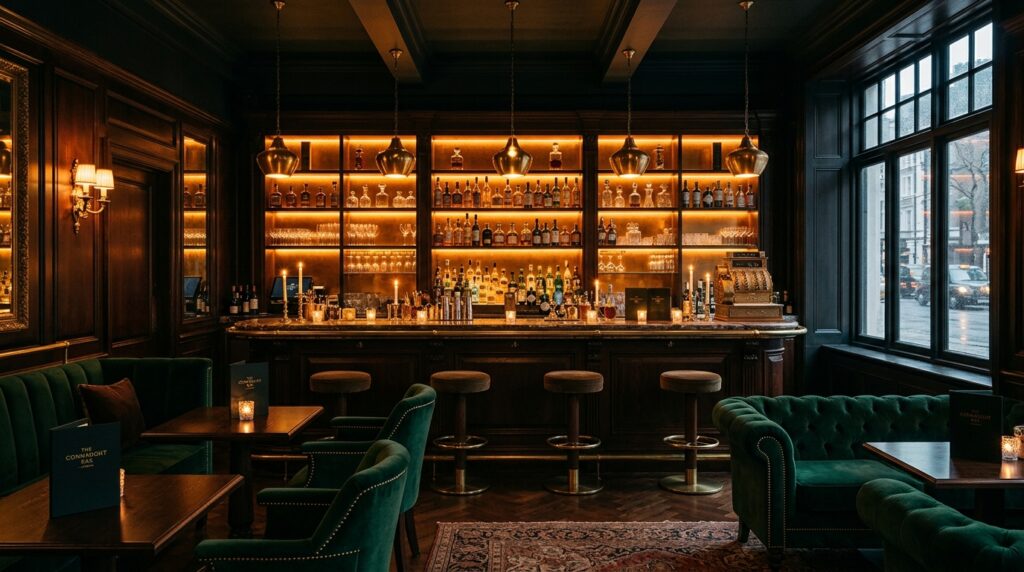
Many commercial photographers produce competent images. A specialist hospitality photographer produces images that perform commercially — and the difference is specific, not general.
Understanding of mixed ambient lighting
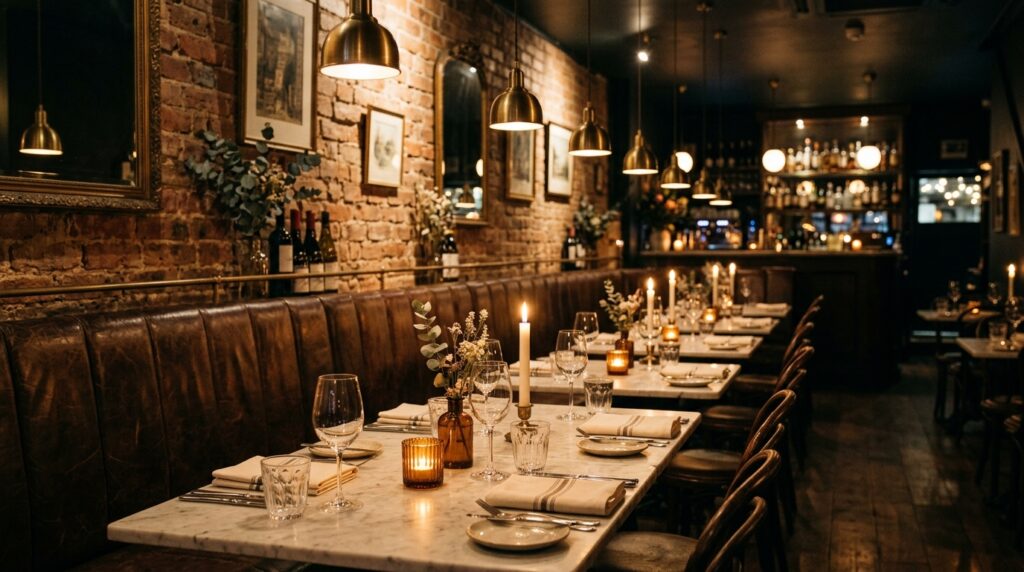
Hospitality spaces are among the most lighting-complex environments in commercial photography. A restaurant operates with daylight, pendant lighting, candles, backlit bar shelving, and kitchen ambient light — all simultaneously, all at different colour temperatures. A restaurant interior photographer understands how to balance these sources so the final image feels like the atmosphere of the space, not a technically corrected version of it. This is a specialist skill that takes years to develop — and the difference between getting it right and getting it wrong is visible immediately.
Knowledge of how images perform on booking platforms
Nielsen Norman Group’s eye-tracking research on OTA browsing behaviour shows that users scan hotel image galleries in a specific pattern — and that the first two or three images in the gallery carry a disproportionate weight in the booking decision.3 A specialist hospitality photographer London understands this and structures the image set accordingly: the hero images that lead the gallery are chosen and composed specifically to maximise first-impression impact, not simply because they represent the best rooms.
Experience working in live operational environments
A professional hospitality shoot happens in an environment that is often simultaneously operational — guests arriving, staff working, deliveries coming in. A specialist hospitality photographer has the experience to plan around these constraints, coordinate with operational teams, and produce exceptional images without disrupting the business. This logistical competence is as important as the technical photography skill.
Cohesive visual identity across the full property
A single great image is not a visual identity. Hospitality brand photography requires a consistent look, feel, and tone across every space in the property — bedrooms, lobby, F&B, spa, outdoor spaces, and lifestyle content. That consistency is what makes a brand’s gallery feel considered rather than assembled from different shoots at different times. It is the visual equivalent of brand standards — and it takes a specialist to maintain it across a full multi-day production.
Planning Your Hospitality Photography Investment
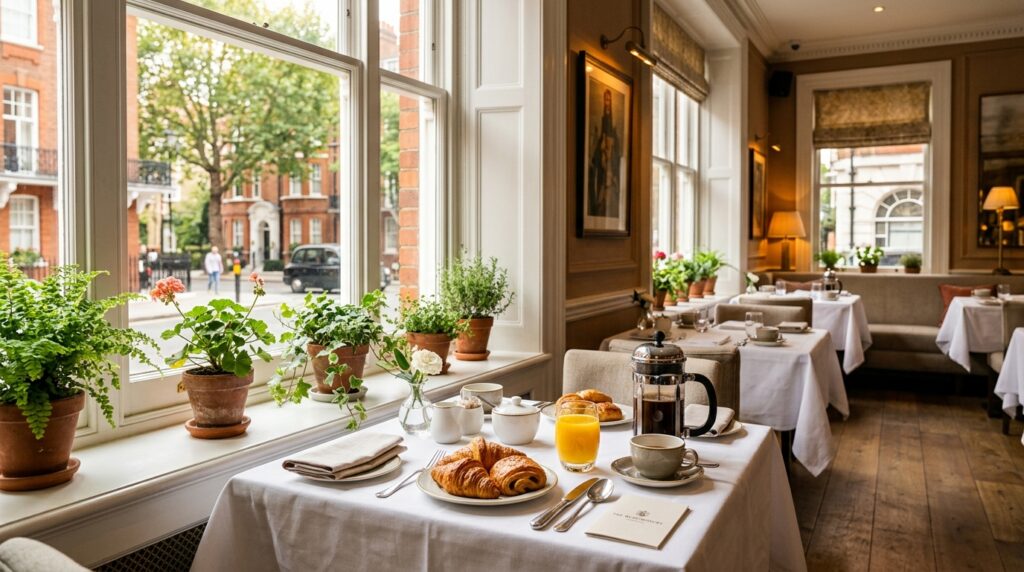
For hospitality brands approaching a photography project for the first time, or reviewing an existing library that is no longer serving them, HospitalityNet’s analysis of digital marketing ROI in hospitality identifies visual asset quality as the highest-return marketing investment available to independent and boutique operators — ahead of paid search, social advertising, and email marketing.4 The reason is longevity: a well-produced set of images works across every channel for three to five years.
Here is how to plan the investment effectively:
Audit your existing image library first
Before commissioning new photography, identify specifically what is failing. Is it the bedroom imagery that is underperforming on OTAs? Is it the F&B content that is preventing press coverage? Is it the lack of lifestyle imagery that is limiting engagement on social? A targeted brief produces better results than a generic ‘we need new photos’ instruction.
Align the brief to your commercial goals
The brief for a hospitality photographer should start with the commercial outcome you need — more direct bookings, higher ADR, press coverage, event enquiries — and work backwards to the specific images required to achieve it. A brief that starts with ‘photograph every room’ produces a library. A brief that starts with ‘we need imagery that supports a £350 per night average rate and drives direct bookings’ produces a commercial asset.
Plan for multiple outputs from a single shoot
Professional hospitality photography is most cost-efficient when a single shoot produces images formatted for every use case: OTA hero images, website banners, social media crops, print-ready files for brochures, and PR-quality high-resolution files for editorial use. Planning the output formats at briefing stage — not after delivery — ensures you get maximum value from a single production day.
Build a refresh programme, not a one-off project
The most commercially effective London hospitality brands treat photography as a continuous programme — updating F&B imagery seasonally, refreshing room imagery after refurbishment, and adding lifestyle content ahead of key booking periods. A relationship with a specialist commercial hospitality photography professional makes this sustainable and visually consistent.
Frequently Asked Questions
What types of venues does a hospitality photographer cover?
A specialist hospitality photographer covers the full range of commercial venues where guest experience is the product: hotels, boutique properties, serviced apartments, restaurants, bars, private members clubs, spas, event venues, and any space where the interior itself is part of what is being sold. In London, this spans everything from five-star Mayfair properties to independent neighbourhood restaurants in Peckham or Dalston — the brief changes, but the commercial logic is the same.
How do I know if my current hospitality photography needs replacing?
Three signals are reliable indicators: your OTA click-through rate is below your competitive set’s average; your press enquiries are low or non-existent; and your social media engagement on property imagery is flat. Any one of these points to a visual quality problem. All three together is a clear mandate to reinvest. A professional hospitality photographer can review your existing library and give an honest assessment of what is salvageable and what needs reshooting.
Can the same photographer handle both hotel and restaurant photography?
Yes — and there are significant advantages to doing so. A hospitality photographer London who covers both hotel and F&B photography within a single property produces a visually consistent library where the bedroom imagery, the restaurant imagery, the bar imagery, and the lifestyle content all feel like they belong to the same brand. This consistency is one of the most underappreciated commercial advantages of working with a single specialist across an entire property. View examples across both disciplines in the hotel photography portfolio and restaurant and bar photography portfolio at interiorphotographer.photos.
What is the typical turnaround for a hospitality photography shoot?
Finished images are typically delivered within one to two weeks of the shoot date, with expedited delivery available where marketing deadlines require it. For larger multi-day productions, a first batch of priority images — OTA heroes and website banners — can often be delivered ahead of the full set to allow listing updates to begin while post-production continues on the remaining images.
Is lifestyle photography necessary, or are interior shots sufficient?
For most hospitality brands, both are necessary — and they serve different functions. Interior photography communicates the quality of the physical space. Lifestyle photography communicates the experience of being in it. Guests booking a London hotel or restaurant are purchasing an experience, not a room or a table — and lifestyle imagery is the visual language of experience. A complete commercial hospitality photography brief includes both, calibrated to the proportional needs of the brand. View examples of lifestyle work in the lifestyle photography portfolio and advertising photography portfolio at interiorphotographer.photos.
Commission Your Hospitality Photography Project
A specialist hospitality photographer is one of the most directly revenue-connected professionals your brand works with. The images they produce determine how your property is perceived before any guest interaction, they underpin every booking channel you operate, and they represent your brand in every press feature, social post, and OTA listing that reaches a potential customer.
Browse the hotel photography portfolio, the restaurant and bar photography portfolio, and the lifestyle photography portfolio at interiorphotographer.photos — then get in touch via the contact page to discuss your brief. Joel Knight is a London-based hospitality photographer working with hotels, restaurants, bars, and hospitality groups across London and internationally.
REFERENCES
- Deloitte (2023). 2023 Travel Industry Outlook: Consumer Priorities and Booking Behaviour. www2.deloitte.com/travel-hospitality. [Annual report — visual content quality as top-five booking decision factor among under-45 hospitality consumers.]
- Skift Research (2023). Direct Booking Behaviour and the Role of Visual Content in Hotel Discovery. skift.com/research. [Industry research — correlation between OTA standout imagery and direct booking channel visits.]
- Nielsen Norman Group (2021). Eye-Tracking Study: How Users Browse Hotel Listings Online. nngroup.com. [UX eye-tracking research — gallery scanning pattern and disproportionate weight of first images in booking decisions.]
- HospitalityNet (2022). Digital Marketing ROI in Hospitality: Where Independent Hotels Should Invest. hospitalitynet.org. [Industry analysis — visual asset quality as highest-return digital marketing investment for independent and boutique hospitality operators.]